
SBA Loans Explained for Small Businesses
SBA loans are government-backed small-business loans issued by approved lenders (banks, credit unions, and select nonbank lenders).
The Small Business Administration doesn’t usually hand you the money directly—instead, it guarantees a portion of the loan, which reduces lender risk and can unlock better terms for borrowers who don’t qualify for conventional financing.
For small businesses, SBA loans often stand out for longer repayment terms, flexible use of funds, and competitive pricing compared with many online loans. But SBA loans also come with strict eligibility rules, detailed documentation, and a process that can feel slow if you’re not prepared.
This guide explains SBA loans in plain language—how they work, the major program options, real costs and requirements, the step-by-step application process, and what to expect in 2026 and beyond.
You’ll also see practical strategies to improve approval odds and avoid the most common (and expensive) mistakes with SBA loans.
What SBA Loans Are and How They Work
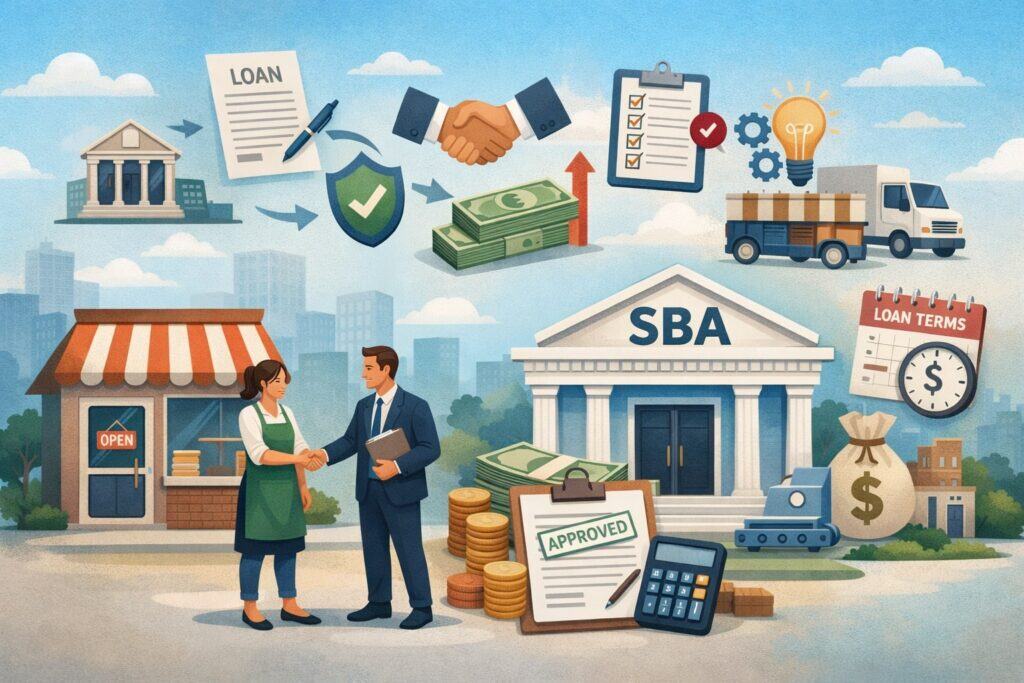
At the core, SBA loans are a partnership between you, a lender, and the SBA. The lender underwrites and funds the loan. The SBA provides a guarantee (a promise to reimburse part of the lender’s losses if the borrower defaults), which encourages lenders to make loans they might otherwise decline.
That guarantee is why SBA loans can be more accessible than conventional bank loans—especially if your business is young, your collateral is limited, or your industry is harder to finance.
But “more accessible” does not mean “easy.” Most SBA loans still require proof your business can repay the debt from cash flow, along with strong documentation and a realistic plan.
It’s also important to understand what SBA loans are not. They are not grant money. They are not guaranteed approvals. And they’re not always the fastest solution when you need funds urgently.
A useful mental model: SBA loans sit between traditional bank loans and short-term alternative financing. They can be an excellent fit when you want long-term affordability and can invest time in the application process—especially for equipment, working capital, buying a business, or owner-occupied real estate.
Why Small Businesses Use SBA Loans (Key Advantages)

Small businesses use SBA loans because the structure often improves the deal compared with many other financing options.
First, SBA loans frequently provide longer repayment terms. Longer terms can reduce monthly payments and protect cash flow—especially for big-ticket investments like equipment, renovations, or real estate.
Second, SBA loans can support a wide range of business goals. Depending on the program, SBA loans may be used for working capital, purchasing inventory, refinancing certain debt, buying a business, purchasing equipment, tenant improvements, or acquiring owner-occupied commercial property. This flexibility is a major reason SBA loans remain a go-to option.
Third, the SBA guarantee can help a lender say “yes” when a conventional lender would say “no.” That matters if you have limited collateral, a shorter operating history, or a complex transaction like an acquisition.
Finally, SBA loans bring structure and consistency. Underwriting standards are clearer than many merchant cash advances or high-cost online products, and pricing is typically more transparent.
Recent policy announcements also point toward tightened underwriting and clearer eligibility checks, which can reduce program risk over time.
The Main SBA Loan Programs Small Businesses Should Know

The SBA has multiple loan programs, but most small businesses focus on a handful. Understanding which SBA loans match your use-case saves time and prevents mismatched applications that get delayed or declined.
SBA 7(a) Loans
The 7(a) program is the most common type of SBA loan because it’s flexible. It can support working capital, expansion, acquisition, equipment, and in many cases real estate (especially when tied to a broader business purpose).
As of the SBA’s program overview, the maximum loan amount for a 7(a) loan is $5 million. That ceiling shapes many deals: if your project is larger than that, you may need a combination of financing sources or a different structure.
7(a) loans come in multiple “delivery methods,” including standard 7(a) and faster or specialized variants. For example, SBA Express and Export Express have their own caps and streamlined processing rules. The SBA’s lender guidance notes that SBA Express and Export Express have maximum loan amounts of $500,000.
When people say “I’m applying for SBA loans,” they often mean 7(a). The big win is flexibility—but you’ll need strong documentation, good cash-flow coverage, and a clean explanation of how the funds create measurable business value.
SBA 504 Loans (Owner-Occupied Real Estate and Major Equipment)
The 504 program is designed for long-term fixed-asset financing—most commonly owner-occupied commercial real estate and heavy equipment.
A typical 504 structure includes: a lender in first position, a Certified Development Company (CDC) in second position, and a borrower down payment. This structure often supports lower down payments than a conventional commercial mortgage, with stable long-term financing for the CDC portion.
A practical detail many owners miss: 504 loans follow debenture schedules and market-based pricing for the CDC-backed portion. The SBA publishes official debenture funding schedules (useful for planning closing timelines).
If you’re buying a building to run your business (not to rent out to others), or if you’re purchasing long-life equipment, SBA loans under the 504 program can be one of the strongest “cash-flow friendly” options—especially when compared to shorter-term equipment notes.
SBA Microloans
Microloans are built for smaller financing needs—often early-stage businesses, community-based lending, or owners who benefit from hands-on technical assistance.
The SBA’s microloan program page states that microloans provide loans up to $50,000, and that intermediaries (nonprofit community-based lenders) administer these loans and may provide management and technical assistance.
Microloans can be a smart alternative when your request is too small for many banks to prioritize, or when you’re building your credit and financial reporting systems. For many owners, microloans are also a stepping-stone to larger SBA loans later.
Disaster Loans (When Eligible)
Disaster-focused SBA loans can become available after declared events and may offer special terms for eligible businesses and homeowners. These programs have specific triggers and eligibility rules that change based on the situation.
If your business is impacted by a qualifying event, it’s worth checking official program announcements and documentation at the time of need, because terms and application windows can vary.
SBA Loan Eligibility Requirements (What Lenders Look For)
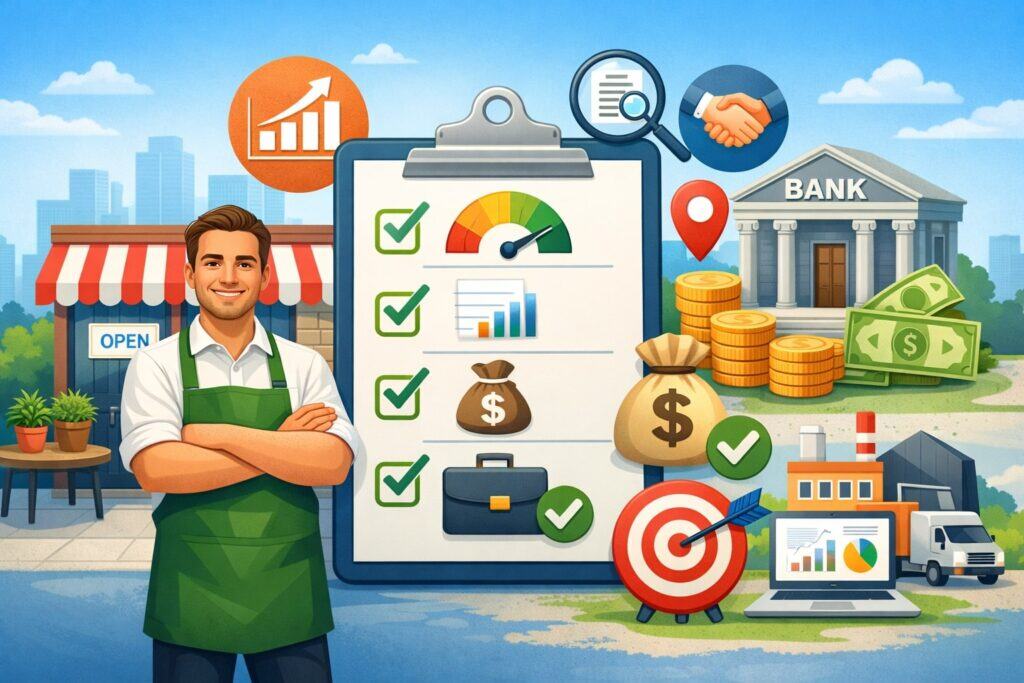
Eligibility for SBA loans is more than “small business + needs money.” Lenders evaluate two layers: SBA program eligibility and lender underwriting.
From the SBA’s 7(a) program page, base eligibility includes that the business must be an operating business, operate for profit, and be located in the U.S. (You’ll see this location rule in most SBA lending guidance.)
Beyond basic eligibility, most lenders focus on these decision pillars:
- Cash flow and repayment ability: Can the business repay the loan from ongoing operations with a healthy cushion? Lenders want consistent revenue, stable margins, and realistic projections—especially if you’re using SBA loans for expansion or acquisition.
- Credit profile: Both business credit (if established) and owner credit matter. Late payments, high utilization, and recent derogatory marks can slow approvals or increase required documentation.
- Equity injection / down payment: Many deals require the borrower to contribute capital. The amount depends on the transaction type (working capital vs. acquisition vs. real estate), risk profile, and program.
- Management experience: Lenders fund people as much as numbers. Industry experience and a track record of execution strengthen SBA loans applications.
- Use of proceeds: SBA loans require a clearly allowable purpose and a sensible plan. Vague requests (“general business”) without detail often lead to requests for more information or a decline.
In 2025–2026, lenders have also been watching policy changes emphasizing stricter, more standardized underwriting in parts of SBA lending. Practically, that means your documentation quality matters more than ever.
SBA Loan Terms, Rates, and Real Costs (Fees You Must Budget For)
A major reason businesses want SBA loans is affordability—but “affordable” still includes multiple cost components. To plan correctly, think in terms of total cost, not just interest rate.
Interest Rate Structure
Most SBA loans under 7(a) are variable rate (though fixed options exist). The lender typically prices the loan as a spread over a base rate, subject to SBA maximums. The exact rate you receive depends on term length, risk profile, collateral strength, and the lender’s policies.
504 loans usually have a blended structure: the bank portion may be negotiated, and the CDC portion is tied to debenture pricing and term. That’s why 504 can be attractive for long-term fixed assets—you can often stabilize payments for a long horizon.
SBA Guaranty Fee and Ongoing Service Fees (7(a))
Many borrowers are surprised by SBA-related fees. The SBA publishes annual fee guidance that can change by fiscal year and may include exceptions. For fiscal year 2026, SBA issued an information notice covering 7(a) fees effective October 1, 2025.
In plain terms: some SBA loans include an upfront guarantee fee (often financed into the loan) and an annual service fee (often built into payments or loan economics). Whether you pay the full amount can depend on loan size, program, and whether any fee relief is in place for that period.
Other Common Costs
When budgeting SBA loans, plan for:
- Packaging or origination fees (varies by lender and provider)
- Third-party reports (appraisals, environmental reports for real estate, business valuation for acquisitions)
- Closing costs (legal, filing, lien recordings)
- Insurance requirements (property/hazard insurance, sometimes life insurance depending on policy and structure)
The real lesson: SBA loans can be cost-effective over time, but the upfront process can include meaningful one-time expenses. A strong application package reduces do-overs—and do-overs are what make SBA financing feel “expensive.”
What You Can Use SBA Loans For (Allowable Uses of Proceeds)
One reason SBA loans are so popular is how many business purposes they can support—if documented correctly.
Common eligible uses include:
- Working capital to stabilize cash flow, fund operating expenses, and support growth
- Inventory purchases to meet seasonal demand or expansion
- Equipment purchases including vehicles and machinery used for business
- Business acquisition including buying an existing business (with careful valuation and cash-flow review)
- Leasehold improvements and tenant build-outs
- Owner-occupied real estate purchase, construction, or renovation (especially with 504)
- Refinancing certain business debt when it improves cash flow and meets program rules
What causes problems is not the purpose itself, but weak documentation. For SBA loans, you should be able to map every dollar to a line item: invoices, bids, purchase agreements, payoff statements, or budgets tied to a timeline and expected ROI.
If your use of funds is mixed (for example, buying a building and also funding working capital), lenders may structure the financing with multiple components—sometimes combining SBA products or pairing an SBA loan with a conventional line of credit.
Step-by-Step SBA Loan Application Process (What to Expect)
Applying for SBA loans is a project. If you treat it like one—organized documents, clean financials, and fast responses—you can shorten timelines dramatically.
Step 1: Choose the Right SBA Loan Type
Start with the purpose: working capital vs. real estate vs. equipment vs. acquisition. Then choose the SBA product that matches it. Misaligned applications are a leading cause of delays.
A good lender will guide you, but you’ll move faster if you already know the likely fit: 7(a) for flexibility, 504 for fixed assets, microloan for smaller needs, and special-purpose options when applicable.
Step 2: Prepare a Document Package
Most lenders request some version of:
- Business financial statements (P&L, balance sheet)
- Year-to-date financials and bank statements
- Business tax returns (often 2–3 years) and personal tax returns for owners
- Debt schedule
- Ownership details and organizational documents
- A narrative explaining the business, use of proceeds, and repayment plan
If you’re acquiring a business, add purchase agreements, seller financials, and valuation documentation. If real estate is involved, expect appraisals and environmental steps.
Step 3: Underwriting and SBA Review (When Required)
Some lenders can approve within delegated authority depending on lender status and program type. Others submit to the SBA for review.
Recent SBA communications point to shifts toward standardized underwriting expectations in certain periods. In practice, that means underwriters may ask more “why” questions and want tighter verification.
Step 4: Closing and Funding
Closing is where timelines can slip—especially with real estate. Appraisals, title work, insurance binders, lien filings, and final verifications all happen here.
For 504 loans, timing can align with debenture funding schedules; the SBA publishes these schedules to support planning.
The best way to prevent last-minute chaos is to respond fast, keep explanations consistent across documents, and disclose issues early rather than hoping they won’t appear.
How to Improve Approval Odds for SBA Loans (Practical Tips That Work)
If you want SBA loans approval odds to go up, focus on reducing uncertainty for the lender. Underwriters don’t decline “because they hate the business.” They decline because repayment or eligibility looks uncertain, or because documentation doesn’t support the story.
Here are high-impact improvements:
- Strengthen your cash-flow narrative: Show how the business makes money, who pays you, why revenue is stable, and what protects margins. Connect that story to the requested payment amount.
- Clean up financial reporting: If your books are messy, fix them before applying. Reconcile bank accounts, correct owner draws, separate personal expenses, and ensure your tax returns align with your financial statements.
- Reduce personal credit risk: Pay down revolving debt, correct errors on credit reports, and avoid new inquiries before applying. Many lenders view the owner’s credit discipline as a proxy for business discipline.
- Document equity injection clearly: If you need a down payment, show where it’s coming from and prove it’s seasoned (sitting in accounts long enough) to avoid questions about borrowed injection.
- Prepare for underwriting questions: If you have a prior bankruptcy, tax lien, late payments, or unusual revenue swings, write a short, honest explanation and show what changed. Surprises kill SBA loans deals.
The goal is to make it easy for the lender to advocate for you. A strong package can turn a borderline application into an approval.
Common SBA Loan Mistakes That Cause Delays or Denials
Small businesses often lose time on SBA loans because of preventable issues. These are the big ones.
- Applying before your numbers make sense: If you can’t show repayment capacity, no amount of paperwork will fix it. Sometimes the right move is to wait one or two quarters, improve margins, and apply stronger.
- Mixing personal and business finances: Underwriters want clean separation. Personal expenses running through the business create confusion and weaken credibility.
- Unclear use of proceeds: “Working capital” is not a plan. A plan looks like: payables cleanup, inventory purchase cycle, marketing budget, staffing, and expected revenue impact.
- Underestimating closing requirements: Real estate is paperwork-heavy. If you’re using SBA loans for property, expect appraisals, insurance, environmental checks, and title work to take time.
- Choosing the wrong lender: Not all lenders prioritize SBA. Some banks do a high volume of SBA loans and move efficiently; others treat SBA as an occasional product and move slowly. Lender fit matters.
SBA Loans vs. Other Small Business Financing Options
It’s smart to compare SBA loans against alternatives—because the “best” financing depends on urgency, purpose, and the strength of your file.
- Term loans (conventional bank): Can be simpler if you qualify, but often require more collateral and stronger credit. If you qualify conventionally, compare total costs and flexibility.
- Business lines of credit: Great for short-term working capital cycles. Many businesses pair a line of credit with SBA loans used for long-term needs.
- Online loans and revenue-based financing: Usually faster, often more expensive. They can be a bridge if timing is critical, but they may reduce your ability to qualify for SBA loans later if payments stress cash flow.
- Equipment financing: Can be faster and secured by the equipment itself. Compare term length and total cost; for larger purchases, SBA loans may provide longer amortization.
Latest SBA Loan Policy and Market Trends (What’s Changing)
SBA loans don’t exist in a vacuum. Policy, underwriting standards, and program economics shift over time.
One major area borrowers feel is fees. SBA issued official guidance on 7(a) fees for fiscal year 2026, effective for loans approved starting October 1, 2025. If you apply around fiscal-year changes, confirm the fee schedule your lender is using and whether exceptions apply.
Another trend is the push toward tighter and more standardized underwriting. SBA communications in 2025 referenced revisions that move away from looser standards and toward pre-existing criteria.
From a borrower perspective, that typically means more verification, clearer documentation, and less tolerance for “hand-wavy” explanations.
On the 504 side, planning and timing matter because debenture schedules influence when parts of the financing are priced and funded. The SBA’s published 504 debenture funding schedule for calendar year 2026 is a good example of the operational detail that can impact closing timelines.
Future Predictions for SBA Loans (2026–2028 Outlook)
No one can guarantee the future of SBA loans, but you can watch the direction of travel.
- More documentation, more consistency: If policy continues emphasizing standardized underwriting, borrowers should expect stronger verification of income, eligibility, and use of proceeds. The upside is reduced fraud and greater program stability, which can protect SBA loans availability long-term.
- Faster processing through better tech—selectively: Many lenders are investing in automation for document collection, spreading financial statements, and identity verification. That doesn’t eliminate underwriting, but it can shorten the “back-and-forth” stage for organized borrowers.
- Continued attention to program economics (fees and risk): Fee schedules are already adjusted through official notices by fiscal year. If delinquency or subsidy pressures rise, policymakers may tweak fees, eligibility thresholds, or documentation requirements to keep SBA loans sustainable.
- Stronger differentiation between lender types: High-volume SBA lenders will likely keep getting faster and more efficient. Low-volume lenders may fall behind, making lender selection an even bigger factor in how smooth your SBA loans experience is.
Treat these as planning assumptions, not promises. The best hedge is building lender-ready financials and keeping your records clean year-round.
FAQs
Q.1: What is the easiest SBA loan to get?
Answer: “Easiest” depends on your profile and your loan size. Many borrowers find smaller requests simpler because documentation is lighter and repayment is easier to demonstrate. Microloans can be accessible for small amounts through intermediaries (up to $50,000).
For larger requests, a well-prepared 7(a) file can be smoother than people expect—if your finances are clean and the use of proceeds is clearly documented.
Q.2: How much can I borrow with SBA loans?
Answer: The maximum varies by program. For 7(a), the SBA states the maximum loan amount is $5 million. For SBA Express and Export Express, SBA lender guidance lists a maximum loan amount of $500,000. Microloans go up to $50,000.
Q.3: Are SBA loans only for certain industries?
Answer: Some industries are restricted, and lenders also have their own risk appetites. Eligibility often depends on what the business does and how it earns revenue.
The SBA’s 7(a) overview highlights that eligibility factors include the business’s activity, credit history, and where it operates. If you’re in a higher-risk category, you may need a lender with specific experience in that space.
Q.4: How long does it take to get approved and funded?
Answer: Timelines vary widely based on lender speed, your documentation readiness, and whether real estate or acquisitions are involved. Working-capital SBA loans may close faster than transactions requiring appraisals and environmental work.
The best way to reduce time is to submit a complete, consistent package and respond quickly to underwriting questions.
Q.5: Do I need collateral for SBA loans?
Answer: Collateral expectations vary by program, loan size, and lender policy. Many SBA loans are cash-flow underwritten, but lenders may still secure available collateral when practical. If collateral is limited, strong cash flow, solid credit, and a clear business plan become even more important.
Q.6: Can I use SBA loans to buy a business?
Answer: Yes, many borrowers use 7(a) SBA loans for business acquisitions. The lender will usually require strong historical cash flow from the target business, a reasonable purchase price supported by valuation, and a plan showing how you’ll operate and grow the company after closing.
Q.7: What fees should I expect with SBA loans?
Answer: Expect a mix of lender fees and SBA program fees. SBA publishes official fee guidance by fiscal year, including 7(a) fees effective October 1, 2025 for fiscal year 2026. Also budget for third-party reports (like appraisals) and standard closing costs.
Conclusion
SBA loans can be one of the best financing tools for small businesses that want long-term affordability and can handle a documentation-heavy process. If you need flexible working capital, plan to buy a business, or want to purchase owner-occupied commercial property, SBA loans may provide better terms than many alternatives.
The winning approach is preparation. Clean financials, a clear use-of-proceeds plan, and fast responses to underwriting requests can turn SBA loans from a stressful marathon into a manageable project.
Keep an eye on fiscal-year fee changes and policy shifts toward more standardized underwriting, because they influence both cost and documentation expectations.