
Funding Options for First-Time Entrepreneurs (2026 Guide)
Starting a business for the first time is exciting—and financially confusing. You’re trying to prove a concept, win your first customers, and build credibility, all while managing limited cash.
The good news is that funding options for first-time entrepreneurs are broader than ever. The challenge is choosing the right capital at the right time without overpaying, over-promising, or giving away too much ownership too early.
As someone who has reviewed hundreds of small-business funding files (from bootstrapped service companies to venture-backed startups), I’ll tell you the same thing I tell new founders: the “best” funding is the one that matches your business model, risk profile, timeline, and collateral.
A local service company with steady invoices shouldn’t fund itself like a high-growth software startup. And a first-time entrepreneur shouldn’t sign a personal guarantee without understanding the downside.
This guide breaks down modern funding options for first-time entrepreneurs—from bootstrapping and grants to SBA-backed loans, CDFIs, crowdfunding, and angel investment—using practical examples, lender and investor terminology, and the rules that govern each path.
We’ll also cover future trends (like faster underwriting and stricter disclosure expectations) so you can plan ahead.
Understand Your Capital Needs Before You Pick a Funding Type
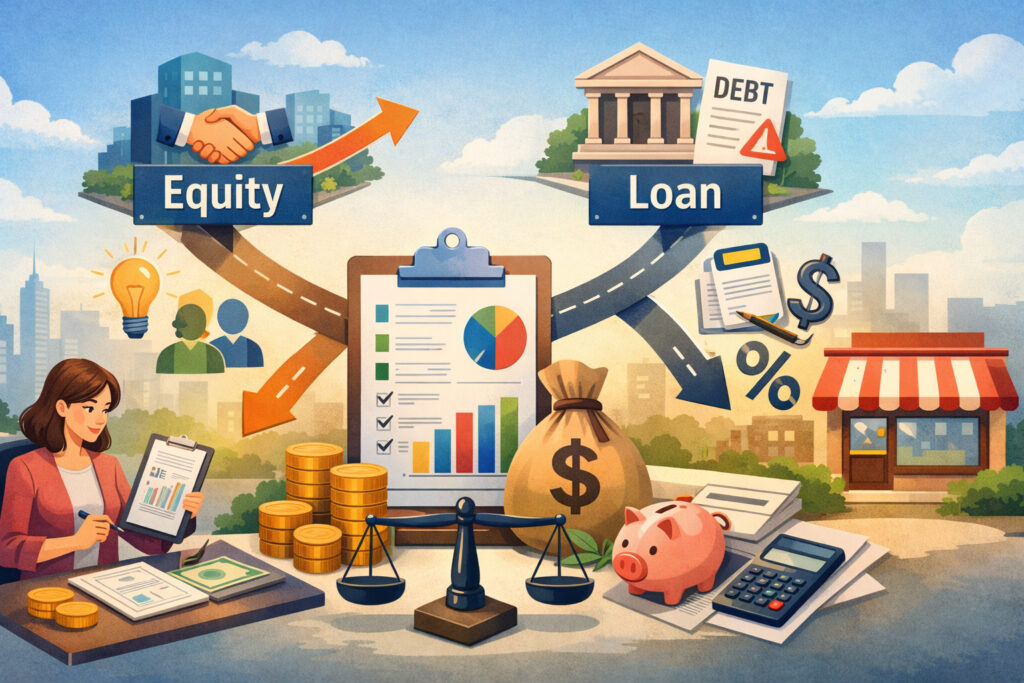
Before comparing lenders or pitching investors, you need a clean definition of what you’re funding. Most first-time entrepreneurs underestimate working capital and overestimate how quickly revenue becomes usable cash.
In real operations, money gets trapped in inventory, payroll timing, chargebacks, returns, marketing tests, minimum order quantities, and software subscriptions. If you borrow based on a best-case forecast, you’ll feel “funded” for 60 days and then hit a wall.
Start by separating funding into three buckets:
- Startup costs (one-time): equipment, deposits, licenses, initial inventory, basic branding.
- Working capital (ongoing): payroll, rent, ads, materials, contractor bills, and “float.”
- Growth investments (scalable): hiring, expansion, product development, new locations.
Lenders care about repayment sources (cash flow), while investors care about upside and defensibility. That’s why the same $50,000 can be financed three completely different ways—microloan, revenue-based financing, or equity crowdfunding—depending on whether you have predictable sales, a repeatable growth engine, or a strong story plus traction.
A practical method is a 13-week cash flow forecast plus a conservative “runway” calculation. If your revenue drops 20% and your costs rise 10%, can you still survive? This stress-test is how experienced operators choose funding options for first-time entrepreneurs that won’t collapse under normal volatility.
Bootstrapping and Self-Funding: The Most Underrated Option

Bootstrapping sounds basic, but it’s often the smartest route for first-time entrepreneurs because it forces operating discipline and reduces long-term cost.
Bootstrapping includes personal savings, reinvesting early profits, preselling services, minimizing fixed expenses, and using lean tools until revenue proves the model. Unlike debt, bootstrapping doesn’t create mandatory payments. Unlike equity, it doesn’t dilute ownership or complicate your cap table.
The real strength of bootstrapping is control. You can pivot pricing, change your offer, or rebuild your product without reporting to a lender’s covenant checklist or an investor’s growth demands.
Bootstrapping also improves future approvals: lenders and investors love founders who can show cost control, early customer validation, and evidence that the business can operate without constant cash injections.
Real-world example: A first-time entrepreneur launches a mobile auto-detailing service. Instead of financing a full van build-out, they start with portable equipment, operate from home, and schedule jobs to maintain positive cash flow. After 90 days of consistent deposits, they qualify for better funding terms and can upgrade tools without desperation.
Bootstrapping isn’t free, though. The hidden cost is time: slower growth, fewer experiments, and personal financial exposure. If your market is time-sensitive or competitor-heavy, bootstrapping alone may not be enough.
Still, as a foundation, it’s one of the best funding options for first-time entrepreneurs because it builds real traction and bargaining power.
Friends and Family Funding: Do It Like a Professional

Friends-and-family money is common, but it becomes dangerous when it’s informal. The fastest way to damage relationships is to treat funding like a handshake while the business is still high-risk.
If you choose this route, behave like a professional issuer: document the terms, define repayment expectations, and communicate clearly about the possibility of loss.
There are generally three structures:
- Gift (best for relationships, worst for discipline): no repayment expectation.
- Loan: clear interest rate, term, and repayment schedule.
- Equity: ownership in exchange for capital (creates cap table complexity immediately).
For loans, you can use a simple promissory note and set an interest rate consistent with market norms and tax guidance. For equity, be aware that selling ownership can trigger securities law considerations.
Many first-time entrepreneurs accidentally create future fundraising problems by giving 5% here and 10% there without a plan for dilution or control.
Real-world example: A founder raises $25,000 from two relatives to launch a small ecommerce brand. Instead of “paying back when it works,” they set a 36-month repayment schedule with a short grace period and monthly reporting.
If the business grows and later seeks angel investment, the clean paperwork prevents disputes over whether relatives own the business or are creditors.
Friends-and-family can be one of the most accessible funding options for first-time entrepreneurs, but only if you protect both sides with proper documentation, realistic expectations, and honest risk language.
Grants and Non-Dilutive Programs: Free Money That Isn’t Really Free

Grants are attractive because they’re non-dilutive—meaning you don’t give up ownership and you typically don’t repay the funds. But grants demand time, compliance, reporting, and clear eligibility.
For first-time entrepreneurs, grants can be powerful when you align your business with a community impact goal, innovation theme, workforce development initiative, or industry-specific mission.
Grant sources commonly include local economic development offices, nonprofit accelerators, foundation programs, industry associations, and special-purpose initiatives that support targeted outcomes (like job creation, training, or revitalization).
Many grant programs require measurable outputs: hires made, wages paid, business survival milestones, or documented use of funds. If you can’t track and report, you may lose eligibility for renewals and referrals.
A key strategy is “stacking” non-dilutive resources: combine a small grant with mentorship, discounted services, and procurement introductions. Some programs don’t give large checks—but they reduce your costs (legal clinics, accounting support, marketing credits). That’s still capital in disguise.
Real-world example: A first-time entrepreneur starts a commercial cleaning company and wins a small local grant tied to workforce training. The grant covers certifications, uniforms, and initial supplies. With that proof of program compliance and early contracts, the business becomes more financeable through microloans and community lenders.
Grants are among the best funding options for first-time entrepreneurs when you can commit to applications and reporting. The “future” trend here is increased measurement: expect more programs to request data proof, banking verification, and outcomes tracking as budgets tighten and oversight increases.
Microloans and Community Lenders: Smaller Amounts, Better Coaching
Microloans are built for early-stage businesses that may not yet qualify for bank financing. One of the most important programs is the SBA Microloan program, which provides loans up to $50,000 through nonprofit intermediary lenders and often includes business training support.
The SBA notes the typical microloan is much smaller on average (around the low five figures), which matches the reality of early startup needs.
Microloan intermediaries tend to evaluate more than your credit score. They look at your business plan, local demand, management ability, and how you’ll use the funds.
Many also provide technical assistance (like cash flow coaching and basic operations help). That support can be as valuable as the money—especially for first-time entrepreneurs still learning pricing, margins, and payroll cycles.
Another major category is CDFIs (Community Development Financial Institutions). The CDFI Fund, housed in the Treasury Department, supports mission-driven lenders focused on expanding access to capital in underserved communities.
These lenders may offer smaller loans, flexible underwriting, and relationship-based approvals. They often understand thin-file borrowers, newer businesses, and non-traditional collateral better than large banks.
Real-world example: A first-time entrepreneur opens a small food business and needs $30,000 for equipment and initial inventory. A CDFI lender structures a loan with manageable payments and requires monthly reporting for six months. The reporting builds financial habits and strengthens the borrower’s next funding application.
A future consideration: community funding can be sensitive to policy and budget shifts. Recent reporting has highlighted uncertainty around CDFI funding levels and administration priorities, which may affect availability in some regions.
That doesn’t reduce the value of CDFIs—it simply means first-time entrepreneurs should apply early and maintain backup options.
SBA-Backed Loans: Bank-Style Money With Government Support
SBA-backed loans can be excellent funding options for first-time entrepreneurs because they reduce lender risk through a government guarantee—making banks more willing to lend when the borrower is newer or has limited collateral.
The most well-known program is the SBA 7(a) loan program. According to SBA program information, many 7(a) loans have a maximum loan amount of $5 million, with different caps for specific delivery methods like SBA Express.
What first-time entrepreneurs need to understand is how SBA-style underwriting thinks:
- Cash flow coverage (DSCR): lenders evaluate whether operating cash flow covers loan payments with a safety margin.
- Use of proceeds: funds must align with eligible business purposes.
- Personal guarantee: commonly required, meaning your personal assets may be on the line.
- Documentation: tax returns, financial statements, ownership structure, resumes, and projections.
For smaller needs, SBA Microloans (via intermediaries) can be a more accessible entry point than a large 7(a) loan. Many first-time entrepreneurs build a “funding staircase”: microloan → bank line of credit → SBA 7(a) expansion financing.
Real-world example: A first-time entrepreneur buys an existing service business with stable cash flow. The SBA-style structure can finance acquisition costs with a longer term, allowing the new owner to maintain working capital instead of draining cash. The lender still requires strong documentation, industry fit, and a plan for transition risk.
Online Lenders and Fintech Financing: Speed, Convenience, and Tradeoffs
Fintech lending has exploded because it solves a real pain: banks often move slowly and demand extensive paperwork.
Online lenders use automated underwriting, bank-transaction analysis, and sometimes revenue signals from payment processors or ecommerce platforms. For first-time entrepreneurs, this can unlock capital earlier—especially if revenue is already flowing.
Common fintech funding products include:
- Short-term business loans (fixed daily/weekly payments)
- Lines of credit (revolving access, pay interest on drawn funds)
- Invoice financing (borrow against unpaid invoices)
- Merchant cash advances (MCA) (repay as a percentage of card sales)
The risk is cost and repayment pressure. Fast money often has higher APR-equivalent pricing and frequent payment schedules that can strain cash flow—especially for seasonal businesses. First-time entrepreneurs should calculate effective cost, not just the factor rate, and test whether the payment schedule matches revenue timing.
Real-world example: A first-time entrepreneur runs a small catering business. They take quick funding to buy inventory for large events but don’t model cash timing. The daily payments hit before the event invoices settle, creating a cash squeeze. A better structure would be invoice financing or a line of credit timed to receivables.
Fintech can still be one of the best funding options for first-time entrepreneurs if used surgically: short duration, clear ROI (like inventory that flips quickly), and strict controls on total debt burden.
The future trend here is tighter disclosure expectations and more standardized small-business financing transparency, driven by consumer-protection style thinking and state-level oversight.
Revenue-Based Financing: Funding Growth Without Giving Up Equity
Revenue-based financing (RBF) is a hybrid between debt and equity. You receive capital and repay as a percentage of revenue until a fixed repayment cap is reached (for example, 1.3x–2.0x of the original amount, depending on risk).
RBF is popular for businesses with recurring or predictable sales—like subscription services, steady ecommerce, or B2B products with consistent reorder cycles.
The advantage for first-time entrepreneurs is flexibility: payments rise and fall with revenue, which can reduce default risk during slow months. RBF also avoids ownership dilution—meaning you keep your cap table clean while still funding growth.
But RBF isn’t cheap if growth is slow. If your revenue plateaus, you can be stuck repaying for longer than planned. And RBF providers may restrict how you use the funds or require revenue reporting and bank access.
Real-world example: A first-time entrepreneur sells a niche product online with consistent monthly sales. They use RBF to fund inventory expansion and ads, then repay from increased revenue without giving up equity. Because they track contribution margin and CAC (customer acquisition cost), they can prove the funding produces profitable growth.
RBF is increasingly part of modern funding options for first-time entrepreneurs because it fits the “grow carefully” mindset. Future prediction: expect more RBF products integrated into platforms (embedded finance), with underwriting based on real-time sales data.
Equity Funding: Angels, Seed Investors, and Venture Capital
Equity funding means selling ownership in exchange for capital. It’s often misunderstood by first-time entrepreneurs as “free money.” It’s not. Equity is permanent, and investors expect a return—usually through growth and an eventual liquidity event (acquisition, buyout, or scalable profitability).
The main equity categories are:
- Angel investors: individuals investing personal money, often early-stage.
- Seed funds: small venture funds investing earlier than traditional VC.
- Venture capital: typically looking for high-growth, scalable businesses.
Equity is best suited when your business has:
- Large market potential
- A repeatable growth engine
- Strong differentiation (technology, network effects, proprietary advantage)
- A credible path to scaling beyond a local footprint
Real-world example: A first-time entrepreneur builds a software tool for logistics teams. Early pilots show strong retention and expansion revenue. An angel round funds product improvements and sales hires. The founder gives up some equity but gains advisors and connections that accelerate growth.
If you raise equity, learn basic cap table math: dilution, option pools, liquidation preferences, and governance. First-time founders often fixate on valuation and ignore control terms.
The best funding options for first-time entrepreneurs in equity are the ones that match expectations: you should not take venture-style money for a business that can’t or shouldn’t grow at venture speed.
Crowdfunding: Rewards vs. Equity (And the Rules That Matter)
Crowdfunding is powerful because it can combine capital, marketing, and community validation. But there are two very different models: rewards crowdfunding and equity crowdfunding.
Rewards Crowdfunding: Pre-Sell Without Giving Up Ownership
Rewards crowdfunding (often product-based) allows customers to fund production by pre-ordering. This can be ideal for first-time entrepreneurs launching a physical product because it proves demand before you commit to large inventory orders.
The key is fulfillment planning. If you raise money and then miss shipping timelines, refunds and reputation damage can cripple the brand.
Real-world example: A first-time entrepreneur launches a specialized kitchen tool. They use rewards crowdfunding to validate demand and negotiate better manufacturing terms. They build a buffer for defects, shipping increases, and customer support.
Rewards crowdfunding is one of the safest funding options for first-time entrepreneurs when you can execute operations and deliver.
Equity Crowdfunding: Raise Investment Under SEC Rules
Equity crowdfunding lets you sell securities to investors online—but it must follow securities regulations. The SEC explains that Regulation requires offerings to occur through an SEC-registered intermediary and allows eligible companies to raise up to $5 million in a 12-month period, with specific investor limits and disclosure rules. It also notes that securities purchased generally can’t be resold for one year.
For first-time entrepreneurs, the operational reality is this: equity crowdfunding requires storytelling and compliance. You’ll need financial disclosures, risk statements, and ongoing reporting responsibilities. It’s not just a marketing campaign—it’s regulated capital formation.
Business Credit, Credit Cards, and Lines of Credit: Useful, But Handle With Care
Credit cards and revolving lines are common early-stage tools because they’re accessible and flexible. They can be smart for short-term needs—software, travel, small inventory tests—especially when you can pay balances quickly and earn rewards.
To do this responsibly, first-time entrepreneurs should focus on:
- Separating business and personal spending
- Tracking utilization and payment timing
- Avoiding long-term financing on high-interest revolving debt
- Building vendor relationships that report payment history (business credit profile)
A revolving line of credit is often better than stacking cards because it can offer lower rates and clearer repayment structure. However, many first-time entrepreneurs only qualify for strong terms after proving consistent deposits and maintaining clean financial statements.
Real-world example: A founder runs a small B2B service company. They use a credit card for software and travel but pay it off weekly based on incoming client payments. They avoid carrying balances that would eat margins and keep personal credit strong for future approvals.
These tools can be practical funding options for first-time entrepreneurs, but they become dangerous when they mask unprofitable operations. If you need credit cards to cover payroll month after month, the model likely needs pricing changes, cost reduction, or a different funding structure.
How to Choose the Right Mix: A Simple Funding Roadmap
The best capital strategy is rarely “one funding source.” It’s usually a blend that evolves as your business becomes more predictable. Here’s a practical roadmap many first-time entrepreneurs follow:
Phase 1: Validate: Bootstrapping, presales, small grants, small microloans.
Phase 2: Stabilize: Community lender loan, line of credit, invoice financing (if B2B), careful fintech.
Phase 3: Scale: SBA-backed expansion financing (where eligible), larger credit facilities, or equity (if growth is truly scalable).
Your choice should follow three rules:
- Match repayment to cash flow timing (don’t take daily repayment if revenue is monthly).
- Don’t dilute early unless the business demands it (equity is expensive long-term).
- Protect downside risk (understand guarantees, liens, and default outcomes).
This is where “expert discipline” matters: lenders often file liens (like UCC filings) and require guarantees; investors shape governance and exit expectations. The right funding options for first-time entrepreneurs are the ones you can live with during a bad quarter—not just a good month.
Future Trends: What Funding Will Look Like Over the Next Few Years
The funding landscape is moving toward faster decisions, richer data, and tighter verification. Expect three major shifts:
1) Data-driven underwriting becomes standard
Bank statements, payment processing history, and real-time sales analytics are increasingly central. This benefits first-time entrepreneurs who have clean deposits and consistent revenue—because they can “prove” the business without years of tax returns.
2) More transparency and compliance pressure
Equity crowdfunding is already highly regulated under SEC rules, including platform requirements and disclosure obligations. Similar transparency expectations are likely to spread across more small-business financing products as regulators and states emphasize clearer cost disclosure and anti-fraud measures.
3) Community capital may fluctuate, so diversify
CDFIs are a major access channel supported through Treasury-linked programs. But news coverage has highlighted uncertainty and political debate around funding levels and administrative actions affecting CDFI programs.
The practical takeaway: apply early, build relationships, and maintain backup options (microloan, line of credit, or staged bootstrapping).
For first-time entrepreneurs, the future belongs to founders who treat finances like a product: measurable, documented, and continuously improved.
FAQs
Q.1: How do I know which funding options for first-time entrepreneurs are best for me?
Answer: Start with your cash flow reality, not your ambition. If you have predictable deposits, debt options may be stronger because repayment is measurable. If you have a scalable product with high growth potential, equity may fit—especially if the capital accelerates something repeatable (like sales, distribution, or product development).
The best way to choose is to map the capital to a specific outcome: inventory that turns in 30–60 days, equipment that increases capacity, marketing that generates profitable customers, or a hire that expands revenue.
Also consider your risk tolerance. Many first-time entrepreneurs underestimate what a personal guarantee means. If you’re signing personally, you need conservative projections and a backup plan.
If you’re giving up equity, you need clarity on dilution, investor expectations, and control rights. This is why “right financing” is not just about approval—it’s about survival during the messy middle.
Q.2: Are SBA-backed loans realistic for first-time entrepreneurs?
Answer: Yes—often more realistic than people assume—because SBA-backed structures reduce lender risk and can enable approvals that would be harder under pure conventional lending.
The SBA 7(a) program is a major channel, with many loans capped at $5 million (and different limits for specific delivery methods). For smaller early-stage needs, SBA Microloans can provide up to $50,000 through nonprofit intermediaries that also offer technical assistance.
The key is preparation. SBA-style approvals still require documentation, clear use of proceeds, and evidence of repayment ability. First-time entrepreneurs should focus on clean bookkeeping, consistent deposits, manageable personal credit, and realistic projections.
If you’re pre-revenue, you’ll need compensating strengths—like strong experience, collateral, or a co-borrower—depending on lender policy.
Think of SBA funding as a “credibility amplifier.” It rewards founders who run the business cleanly and can explain the plan in lender language: cash flow, margins, and risk controls. Among funding options for first-time entrepreneurs, SBA-backed loans are strongest when you’re already operating with discipline.
Q.3: What are the biggest mistakes first-time entrepreneurs make when raising money online?
Answer: The biggest mistake is optimizing for speed instead of fit. Fast funding can be helpful, but frequent repayments can choke a young business. Another mistake is misunderstanding pricing—looking only at the payment amount rather than effective APR-equivalent cost and total repayment.
First-time entrepreneurs also sometimes stack multiple products (cards + short-term loan + MCA) without modeling the combined cash flow impact.
On the equity side, founders often market equity crowdfunding like a rewards campaign and underestimate compliance obligations. The SEC explains that Regulation Crowdfunding requires offerings to occur through an SEC-registered intermediary and includes disclosure rules and resale restrictions.
If you’re not prepared to provide accurate financial information and ongoing reporting, equity crowdfunding can create long-term administrative risk.
Finally, many founders don’t build a “funding narrative” tied to metrics. Lenders and investors both want to know: what will the money do, when does it pay back, and what happens if things go wrong? Avoiding these mistakes improves approval odds and helps you pick better funding options for first-time entrepreneurs.
Q.4: Can I combine multiple funding options for first-time entrepreneurs without hurting my chances later?
Answer: Yes—combining options is normal—but you must do it strategically and transparently. The goal is to avoid conflicting repayment schedules, hidden liens, and messy ownership.
For debt stacking, understand lien priority and whether a lender files a UCC lien that may affect future borrowing. For equity stacking, keep your cap table clean and avoid giving away small percentages to many people without a plan.
A healthy combination might look like: bootstrapping + small grant + microloan, then a line of credit once deposits stabilize, then an SBA-backed expansion loan later. That progression makes sense because each stage increases predictability and strengthens underwriting.
SBA Microloans are explicitly designed to help businesses start and expand, up to $50,000, through intermediaries with technical assistance.
The combination to avoid is high-cost, short-term repayment layered on top of unstable revenue. That’s how first-time entrepreneurs lose control of cash flow. Among funding options for first-time entrepreneurs, the “right mix” is the one that preserves operational breathing room while building financeability.
Conclusion
The smartest founders don’t “go get money.” They build a system that makes money easier and cheaper to access over time. That means clean bookkeeping, predictable deposits, realistic forecasts, and a clear plan for what each dollar accomplishes.
It also means choosing capital that fits the stage of the business—bootstrapping when validating, microloans and community lenders when stabilizing, SBA-backed loans when scaling predictable cash flow, and equity when growth is truly exponential.
Remember the big idea: funding options for first-time entrepreneurs are not interchangeable. Each option comes with a different price—interest, dilution, compliance, repayment pressure, or opportunity cost.
If you treat funding like a strategy and not a rescue, you’ll make better decisions, keep more control, and build long-term credibility with lenders, investors, and partners.