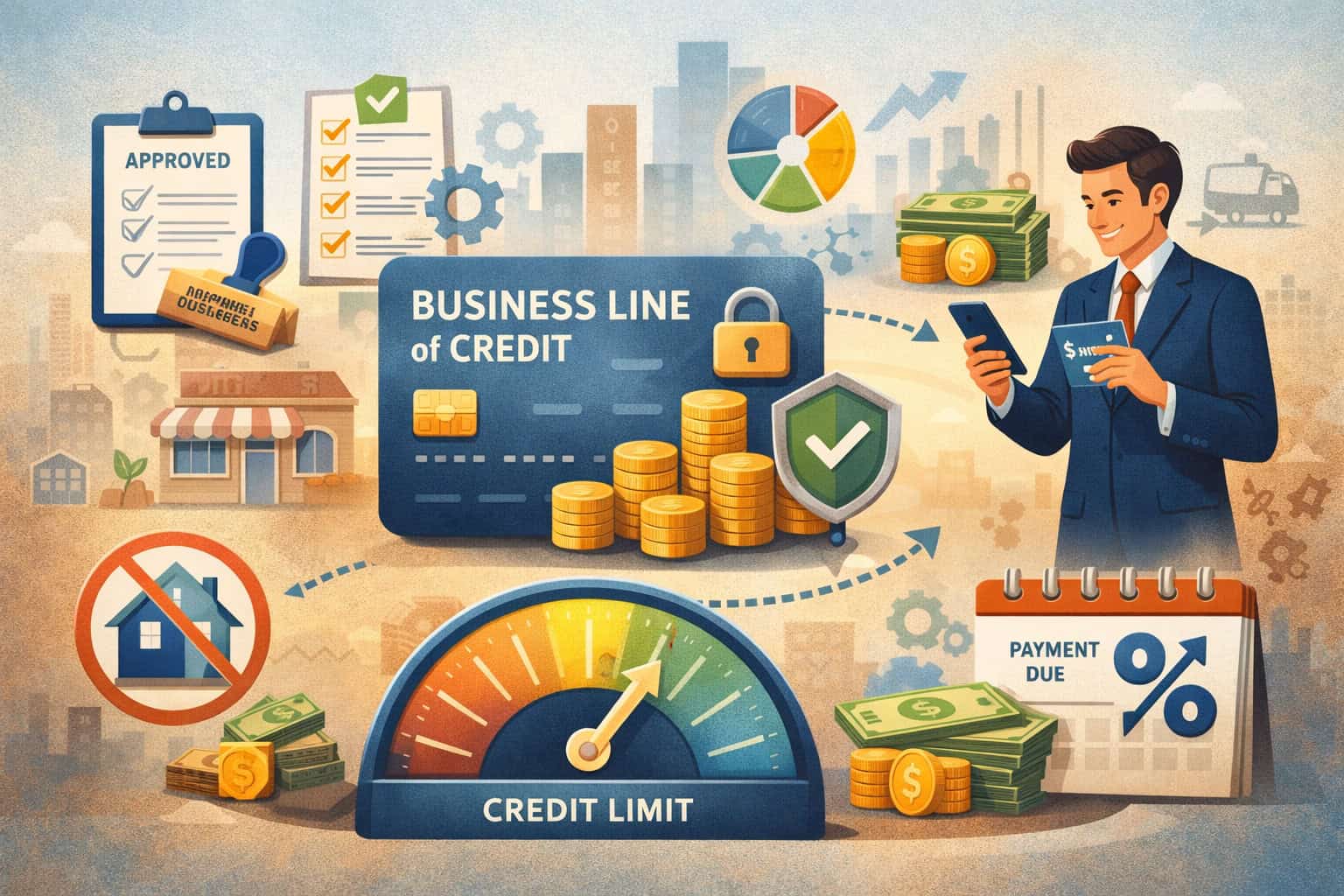
The Ultimate Guide to Unsecured Business Line of Credit
Access to capital can make the difference between staying stuck and moving forward with confidence. For many business owners, the challenge is not whether they need funding, but whether they can get it fast enough, use it flexibly enough, and avoid tying up valuable assets in the process.
That is why the unsecured business line of credit stands out. Instead of receiving one lump sum and repaying it on a fixed schedule, you get access to a credit limit you can draw from when needed, repay, and use again.
Because it is unsecured, you are not typically pledging specific collateral such as equipment, inventory, or real estate to open the account. In practice, that can make it one of the most useful tools for covering short-term working capital needs, smoothing uneven cash flow, and handling surprise expenses.
Revolving credit structures are widely used for operational flexibility, and many lenders position them specifically for payroll, receivables gaps, seasonal inventory, and short-term business expenses.
This guide breaks down how an unsecured line works, who it fits best, how lenders evaluate applicants, what costs to expect, and how to use it wisely. You will also see how it compares with term loans, secured credit lines, business credit cards, and unsecured working capital loans so you can choose the option that actually matches your business needs.
What Is an Unsecured Business Line of Credit?
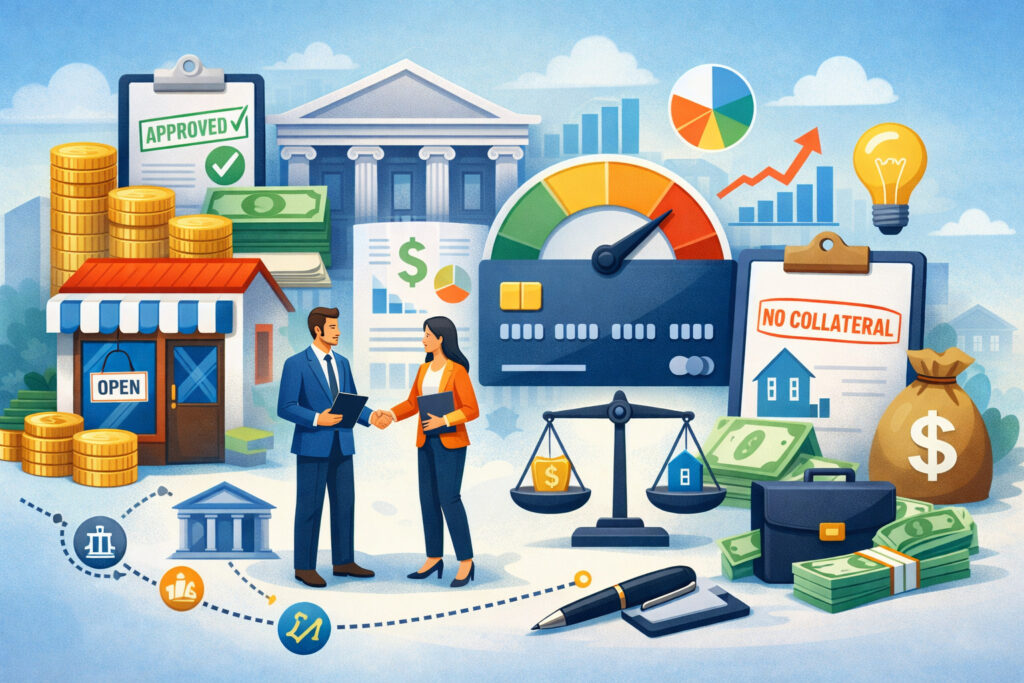
An unsecured business line of credit is a revolving financing arrangement that gives your business access to a set borrowing limit without requiring you to pledge specific business assets as collateral.
You can draw only what you need, when you need it, and you generally pay financing charges only on the amount you actually use rather than the full approved limit. That revolving structure is one of the biggest reasons owners choose this type of funding for day-to-day operating needs.
Think of it as a reusable pool of working capital. If you are approved for a $60,000 limit and draw $12,000 to cover supplier invoices, your available credit drops by that amount. Once you repay that draw according to the lender’s schedule, the available credit opens back up.
This is why many owners see a business line of credit without collateral as a flexible safety net rather than a one-time loan.
That said, “unsecured” does not always mean “no strings attached.” Many lenders still reduce their risk in other ways. They may require a personal guarantee, ask for a blanket lien, review your bank activity closely, or set tighter qualification standards than they would for secured credit.
An unsecured product simply means the facility is not backed by specifically pledged collateral in the same way a secured line might be. That distinction matters because it affects pricing, approval odds, and the amount you may qualify for.
Industry sources also note that unsecured lines often come with higher costs or stricter requirements because the lender is taking more risk.
How an unsecured line of credit for small business works in everyday terms
A lot of owners hear “revolving credit” and assume it works like a business credit card. There are similarities, but an unsecured line of credit often functions more like a borrowing account connected to your business checking activity.
You are approved for a limit, request a draw when needed, receive funds in your account, and then repay that draw on the lender’s terms.
Here is a simple example. A seasonal retailer gets approved for a $40,000 unsecured line of credit for small business needs. Before a busy selling period, the owner draws $15,000 for inventory.
A few weeks later, incoming sales help repay most of that balance. The owner then uses the line again for packaging and temporary payroll support. Instead of applying for new financing each time, the same line supports multiple short-term needs.
This is what makes revolving business credit different from many other funding products. You are not taking out a fresh loan every time an operating expense pops up. You are using a reusable credit tool that can adapt to the rhythm of your business, as long as you stay within the limit and follow the repayment rules.
Why “without collateral” matters to business owners
Collateral can be a major sticking point for small businesses. Not every company has equipment, real estate, or large inventory reserves available to pledge. Even when assets are available, many owners would rather not put them at risk for a relatively modest credit line designed for short-term expenses.
A business line of credit without collateral can be especially attractive for service businesses, consultants, agencies, online sellers, and newer companies that may have healthy revenue but limited hard assets.
It can also help established businesses preserve borrowing capacity for future financing that may truly require collateral, such as equipment loans or commercial real estate.
The tradeoff is important, though. Because the lender cannot rely on pledged collateral in the same way, approval decisions usually lean more heavily on revenue consistency, bank cash flow, credit quality, time in business, and overall business stability.
In other words, unsecured financing may protect your assets, but it often requires a stronger borrower profile to offset the lender’s added risk.
Revolving Credit vs Traditional Business Loans
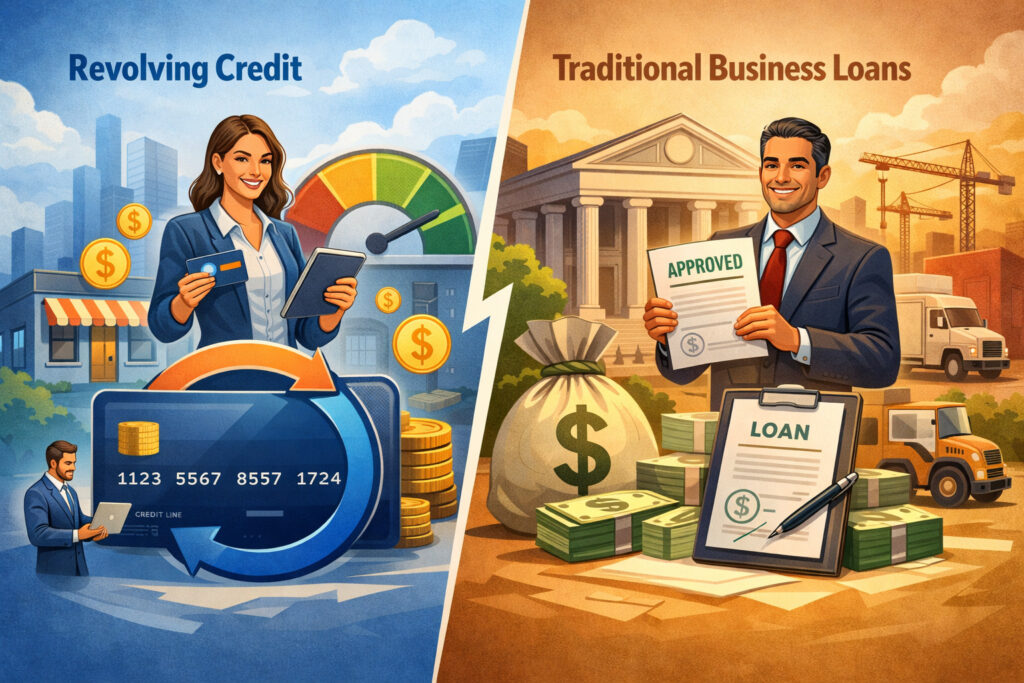
Many business owners start shopping for financing with one broad question: should I get a loan or a line of credit? The answer depends less on the headline interest rate and more on how the funds will be used.
A traditional business term loan usually gives you one lump-sum amount upfront. You repay it over a set term through scheduled installments. That makes it a strong fit for one-time investments with a defined price tag, such as purchasing equipment, renovating a location, or funding a large expansion project.
An unsecured business line of credit, by contrast, is designed for repeated access rather than one-time borrowing. You draw only when needed, repay, and reuse the line again. That makes it better suited for variable expenses, uneven receivables, short-term working capital gaps, and opportunities that appear quickly.
Commercial lending guidance and banking resources consistently describe lines of credit as tools for cash flow fluctuations and short-term operating needs, while term loans are better matched to larger defined investments.
Why revolving business credit feels more flexible
With a term loan, the full amount starts accruing financing costs once disbursed, even if part of the money sits unused in your account. With revolving business credit, you generally pay only on the amount you draw. That difference can be meaningful when your funding needs are unpredictable.
Imagine a contractor who needs extra funds at different points in a project cycle. One month the pressure comes from payroll. Another month it is materials. Another month is waiting on a client payment.
A term loan could overshoot the need and lock the borrower into fixed monthly obligations. A small business credit line can be tapped as needed and repaid as cash comes in, which better matches the stop-and-start nature of operational expenses.
Flexibility also matters psychologically. Owners often feel more in control when they know capital is available without having to reapply every time something shifts. That kind of access can reduce panic borrowing and improve decision-making, especially in businesses with seasonal swings or uneven accounts receivable.
When a term loan is still the better choice
Flexibility is valuable, but it is not always the cheapest or smartest option. If you know you need a fixed amount for a long-term project, a term loan may offer more predictable payments and potentially better pricing. It may also be easier to budget because the repayment schedule is set from the beginning.
For example, if a restaurant needs a full kitchen upgrade or a manufacturer wants a large piece of equipment, drawing piecemeal from an unsecured line may not be the best fit. These are not short-term working capital needs. They are capital investments with a defined cost and a longer payoff horizon.
That is why business owners should think in terms of financing purpose, not just approval speed. A line of credit is often best for movement, fluctuation, and operating flexibility. A term loan is often best for planned investment, expansion, and bigger one-time purchases.
Key Benefits of an Unsecured Business Line of Credit
One reason this financing option remains popular is that it solves several real-world business problems at once. It can provide access, speed, flexibility, and breathing room without forcing you to pledge a specific asset upfront.
For owners managing growing teams, rising expenses, or inconsistent inflows, those benefits are not abstract. They affect whether bills are paid on time, whether opportunities can be seized quickly, and whether temporary setbacks turn into larger financial problems.
Flexible business financing for changing cash flow needs
Cash flow rarely moves in a straight line. A business may be profitable on paper and still run into short-term strain because customers pay slowly, inventory must be purchased early, or payroll hits before receivables arrive. This is where flexible business financing earns its value.
An unsecured line can help bridge the timing mismatch between money going out and money coming in. Banking and SBA resources specifically describe lines of credit as useful for payables and receivables gaps, fluctuating payroll, seasonal purchases, and short-term working capital needs.
That flexibility can keep a temporary gap from disrupting your operations. Instead of delaying inventory, paying vendors late, or turning down work because timing is tight, you can use the line strategically and then pay it down as revenue catches up.
No need to tie up specific collateral
For many businesses, the most obvious advantage is that it is business funding without collateral in the traditional sense. You may not need to pledge machinery, vehicles, property, or inventory to access capital.
This matters because business assets often serve multiple purposes. Equipment may already support operations. Inventory may already be committed to sales. Real estate, if you own it, may be reserved for larger future borrowing. Keeping those assets unpledged can preserve options and reduce risk concentration.
Of course, lenders may still require a personal guarantee or general lien rights, so it is important not to assume “unsecured” means “risk-free.” Still, compared with a secured line tied directly to a pledged asset, unsecured credit can feel much lighter operationally and faster to arrange.
Reusable access to capital
A major strength of a small business credit line is that it can be reused over and over, assuming the account remains in good standing. That makes it more than a one-time transaction. It becomes part of your financial toolkit.
This reusability is especially helpful for businesses that face recurring pressure points, such as:
- Seasonal inventory buying
- Regular payroll cycles
- Ongoing marketing campaigns
- Repair and maintenance surprises
- Temporary dips in receivables
- Short-term contract fulfillment costs
Instead of scrambling for new financing each time, you can draw from a pre-approved source. That consistency can help reduce stress, speed up decisions, and improve operating stability.
Potential Drawbacks, Risks, and Costs to Understand
An unsecured line can be powerful, but it is not free money and it is not always cheap. In fact, some owners get into trouble precisely because the product feels easy to use. Easy access can lead to casual borrowing, and casual borrowing can turn into expensive habit financing.
Before you apply for an unsecured business line of credit options, it helps to understand not just the upside, but the pressure points that can make this product a poor fit if used carelessly.
Higher cost than secured financing
Because the lender takes more risk without specific collateral, unsecured products often cost more than secured ones. The difference may show up through higher interest rates, draw fees, maintenance fees, or stricter renewal terms.
Sources comparing secured and unsecured business lines regularly note that secured lines may offer larger amounts, lower rates, and longer repayment structures because the lender has more protection.
That does not mean unsecured credit is automatically too expensive. It means cost should be evaluated against purpose. Using an unsecured line to cover a short receivables gap that clears quickly may be perfectly reasonable. Using it to carry long-term losses month after month is a different story.
The shorter the time you use the money and the faster you repay it, the more manageable the cost tends to feel. The longer you revolve balances and reborrow to cover old borrowing, the more expensive and risky it becomes.
Personal guarantees and broad legal protections for lenders
Some owners assume that because a line is unsecured, they have no personal exposure. That is often not true. Many lenders still ask for a personal guarantee, which means you agree to be personally responsible if the business does not repay.
Others may file a blanket lien rather than tie the line to one asset. Industry guides commonly note that finding a truly unsecured line with no personal guarantee at all can be difficult.
This is why reading the loan agreement matters so much. The headline phrase “without collateral” can sound simpler than the actual legal structure. You need to know:
- Whether a personal guarantee is required
- Whether a UCC filing or blanket lien is involved
- What triggers default
- Whether the lender can reduce or freeze the line
- Whether renewal is automatic or subject to review
A line of credit is only as flexible as its agreement allows.
Easy access can encourage poor borrowing habits
One subtle downside is behavioral. Because the funds are available on demand, owners may start using the line for expenses that should be paid from normal operating revenue. Over time, the line becomes a patch for weak margins, loose budgeting, or growing overhead.
That is dangerous because a line of credit works best as a short-term bridge, not as a substitute for profitability. If your business needs outside credit every month just to survive routine expenses with no clear payoff, the financing problem may actually be a pricing problem, a collections problem, or a cost structure problem.
How Lenders Evaluate Borrowers for Unsecured Credit
Because there is no specific pledged collateral backing the facility, lenders usually place greater weight on how stable, reliable, and repayable your business appears. In simple terms, they want evidence that your company can handle short-term debt responsibly and that the line will be used by a business with enough strength to pay it back.
Different lenders have different models, but commercial lending guidance and SBA materials consistently point to core themes: credit history, business and personal credit scoring, borrower financials, application data, and cash flow or repayment ability.
Revenue and cash flow usually matter more than hype
If you are applying for business funding without collateral, lenders need to see real operating strength. That often starts with revenue, but revenue alone is not enough. A business can post impressive gross sales and still struggle with collections, thin margins, or irregular inflows.
Lenders commonly analyze recent bank deposits, average monthly revenue, low-balance days, overdraft history, and consistency of incoming cash. They want to know whether your business generates enough dependable cash to support repayment even if a month is slower than expected.
This is why a line of credit is often easier to qualify for when your books are organized and your bank activity tells a clean story. Cash flow quality can carry more weight than optimistic projections.
Credit profile still plays a major role
For many small businesses, especially newer ones, the owner’s personal credit still matters. SBA guidance notes that new-business eligibility is often influenced by the owner’s personal credit, and business lending frameworks also reference applicant and guarantor credit history as important factors.
A stronger credit profile can help in several ways:
- Better approval odds
- Higher limits
- Lower pricing
- More flexible terms
- Fewer risk controls from the lender
That does not mean a less-than-perfect score automatically shuts the door. Some lenders serve weaker credit profiles, but costs may rise and available limits may shrink.
Time in business and stability tell a story
Lenders usually prefer businesses with a track record. Time in business helps them judge whether revenue patterns are real and whether management has handled normal operating cycles successfully.
Stability also shows up in less obvious ways:
- Consistent business address
- Active business bank account
- Clean legal standing
- No major unresolved liens or tax issues
- Organized bookkeeping
- Reasonable debt load relative to revenue
These factors may seem small individually, but together they shape lender confidence. An unsecured line is built on trust in your future cash flow. Everything that supports that trust helps your case.
Typical Qualification Factors for an Unsecured Line
Every lender has its own underwriting model, but most applications for an unsecured business line of credit circle around the same qualification pillars. Understanding these in advance can help you avoid wasting time on lenders that are clearly not a fit.
Revenue, deposits, and working cash flow
Lenders want to see that the business generates enough money to support the requested line. They often look at monthly gross revenue and how consistently cash is coming into the bank. Some will analyze recent bank statements rather than relying only on tax returns, especially for fast-turnaround online applications.
What they are really asking is not, “Does this business ever make money?” It is, “Does this business reliably generate cash that can service revolving debt?” If deposits are highly erratic, or if the account frequently dips close to zero, the lender may worry that a credit line will become a rescue tool rather than a disciplined working capital product.
Businesses with stronger operating cash flow usually have an easier time qualifying for a business line of credit without collateral because cash flow becomes the lender’s main comfort point.
Credit history, debt load, and overall risk profile
An applicant’s credit profile often includes both business and personal dimensions. Lenders may review business credit files, owner credit, current obligations, payment history, and recent borrowing behavior.
SBA materials and business credit resources both emphasize that creditworthiness is not just one number but a combination of payment history, debt use, borrower financials, and business data.
They may also assess your current debt stack. If you already have multiple advances, daily payment obligations, or heavy card balances, even decent revenue may not be enough to offset concern about repayment pressure.
Business model and industry stability
Not all revenue is viewed equally. Some industries are considered more volatile, more seasonal, or more exposed to chargebacks, disputes, or rapid downturns. Lenders may look at industry type, business structure, customer concentration, and recurring versus one-time revenue.
For example, a service business with stable monthly contracts may be viewed differently than a business dependent on a handful of large but irregular projects. A retailer with predictable repeat sales may underwrite differently than a startup with volatile demand.
That does not mean certain industries cannot qualify. It means risk perception influences terms, pricing, and approval standards.
How to Apply for Unsecured Business Line of Credit Step by Step
If you want to apply for unsecured business line of credit options without wasting time, the best approach is to prepare before you submit anything. Rushing through applications can lead to poor lender matches, incomplete files, and weaker offers than your business might otherwise receive.
Step 1: Get clear on how much you need and why
Start by identifying the use case. Do you need a cushion for payroll timing? Inventory purchases? Seasonal marketing? Emergency repairs? Short-term receivables gaps? Be specific.
Then estimate the realistic amount you would draw, not just the maximum you hope to qualify for. Lenders want to understand the purpose of the line, and you need a clear picture of whether the product fits the problem. SBA guidance also encourages borrowers to prepare a clear business case and financial statements when seeking funding.
Step 2: Review your business and personal credit profile
Before applying, review your business credit and your personal credit. Errors, outdated information, or unresolved negative items can hurt your chances or affect pricing. If you need help preparing, useful background reading includes how to improve your business credit score before applying for a loan and how to monitor your business credit regularly.
This step also helps you understand what a lender is likely to see. If your profile has weak spots, you can address them upfront or choose lenders that are better aligned with your situation.
Step 3: Gather financial documents before the application starts
Applications move faster when your information is ready. Many lenders want recent business bank statements, revenue details, entity documents, and owner identification. Some may also ask for tax returns, profit and loss statements, or balance sheets.
If you wait until after applying to gather everything, the process often slows down and you risk missing deadlines or sending inconsistent information.
Step 4: Compare multiple lenders on terms, not just speed
Fast approval is attractive, but it should not be the only factor. Compare:
- Credit limit range
- Draw fees
- Interest structure
- Repayment frequency
- Renewal rules
- Personal guarantee requirements
- Prepayment rules
- Funding speed after approval
If you are generally preparing for financing, how to get approved for a small business loan is a helpful companion read.
Step 5: Submit a clean, consistent application
Once you apply, consistency matters. The revenue you report should line up with bank statements. Your entity information should match formation documents. Your use of funds should make sense relative to the size of the request.
Inconsistencies create friction and can trigger deeper review. A complete, well-organized application helps the lender feel that the business is managed responsibly.
Documents and Information Commonly Required
One reason some business owners feel overwhelmed by financing is that they are unsure what lenders will ask for. While exact requirements vary, most unsecured line applications rely on a familiar set of documents designed to verify the business, assess cash flow, and judge repayment ability.
Common application documents
You may be asked for:
- Business bank statements
- Business tax returns
- Profit and loss statement
- Balance sheet
- Accounts receivable aging, if relevant
- Business formation documents
- Employer Identification Number details
- Business license, if applicable
- Owner identification
- Voided business check or bank verification
- Existing debt information
Some lenders, especially tech-enabled ones, may use digital bank connections instead of requesting every document manually. Others may start with a shorter application and request more only after an initial review.
Why lenders ask for these items
These documents help answer a handful of practical questions:
- Is the business active and legitimate?
- How much money is actually flowing through the company?
- Is cash flow consistent enough to support draws and repayments?
- Are there signs of financial stress?
- Who owns the business and who is responsible for the debt?
- Does the requested line size make sense?
If you are building better financial habits overall, how to build an emergency fund for your business can also help you think more strategically about cash reserves versus borrowing.
Unsecured Working Capital Loans vs Business Credit Lines
Business owners often compare unsecured working capital loans with unsecured lines of credit because both are commonly used for short-term operating needs. The difference is not just technical. It changes how the money arrives, how it is repaid, and how useful it is over time.
What unsecured working capital loans are best for
An unsecured working capital loan typically gives you a lump sum that you repay over a defined schedule. It can be a strong option when you know the approximate amount needed and have a clear near-term use for the funds, such as a marketing push, a planned inventory purchase, or a short-term expansion need.
This kind of product can work well when the cash need is immediate but not ongoing. You borrow once, deploy the funds, and then work through the repayment schedule.
Why a line of credit may be more practical for recurring short-term needs
A line of credit is often better when the exact amount and timing are uncertain. If your cash needs rise and fall throughout the month or season, a reusable revolving structure may be more practical than repeatedly taking out one-time loans.
For example, a staffing company that covers payroll before clients pay invoices may benefit more from a line than from recurring lump-sum loans. The same may be true for a wholesaler managing inventory cycles or a medical practice handling uneven insurance payment timing.
In short:
- A working capital loan is often better for one defined short-term need.
- A line of credit is often better for repeated or fluctuating needs.
Comparing Your Main Financing Options
Choosing the right product is easier when you can see the tradeoffs side by side.
| Financing Option | Best For | How Funds Are Received | Repayment Style | Collateral Requirement | Main Advantage | Main Drawback |
| Unsecured business line of credit | Cash flow gaps, payroll timing, recurring short-term needs | Draw as needed up to a limit | Revolving; repay and reuse | Usually no specific pledged collateral, though guarantee or lien may apply | Flexible access to working capital | May cost more than secured options |
| Term loan | Equipment, expansion, one-time large purchases | Lump sum | Fixed installments over term | Varies by lender and loan type | Predictable structure | Less flexible if needs change |
| Business credit card | Small routine purchases, travel, online spending | Card-based access | Minimum payments or revolve | Usually unsecured | Convenience and rewards | Can be expensive if balances carry |
| Secured line of credit | Larger lines, lower-cost ongoing access | Draw as needed up to a limit | Revolving | Specific collateral often required | Better pricing and larger amounts possible | Assets may be tied up or at risk |
This is why product fit matters so much. The goal is not to get approved for something. The goal is to get approved for the option that solves the actual problem with the least unnecessary cost and risk.
Best Use Cases for an Unsecured Business Line of Credit
The strongest use cases all have one thing in common: the need is real, the purpose is short term, and repayment is expected from normal business activity.
Managing cash flow gaps and payroll timing
This is one of the most practical uses. If your business regularly pays employees, contractors, or vendors before customer payments arrive, a credit line can bridge that timing gap without forcing you into a large fixed loan.
For service businesses, agencies, contractors, distributors, and seasonal operations, this can be the difference between smooth operations and recurring last-minute stress.
Inventory, seasonal expenses, and emergency costs
A retailer may need to stock up before busy months. A landscaping company may need to prepare for equipment repairs and labor shifts. A medical practice may face a sudden software or equipment expense. A line can cover these short-term needs without requiring a separate financing application each time.
Bank resources specifically highlight seasonal inventory, fluctuating payroll, payables and receivables gaps, and short-term operational needs as common line-of-credit uses.
Short-term working capital, not long-term losses
A line of credit is well suited to temporary working capital needs. It is much less suitable for ongoing structural deficits. If the business is consistently losing money, a line can delay the problem rather than solve it.
Use it to smooth timing, capture opportunity, or handle temporary strain. Do not use it to avoid addressing unprofitable pricing, bloated overhead, or chronic collections issues.
Common Fees, Rates, Draw Structures, and Renewal Terms
Not all credit lines are priced the same, and the interest rate alone never tells the full story. This is where many owners underestimate total borrowing cost.
Costs you may see beyond the rate
Depending on the lender, you may encounter:
- Interest charges on drawn balances
- Draw fees each time funds are accessed
- Monthly or annual maintenance fees
- Origination or underwriting fees
- Renewal fees
- Late fees
- Inactivity fees in some cases
A line with a lower rate can still be more expensive if it charges heavy draw or maintenance fees. Always ask for a clear explanation of total cost under realistic usage scenarios.
Draw structures and repayment frequency
Some lenders let you draw funds as needed and repay monthly. Others may require more frequent payments, including weekly or even daily structures on certain products. Some lines revolve smoothly. Others function more like a series of mini-loans under a line umbrella.
Ask these questions:
- How do draws work?
- Is there a minimum draw amount?
- How often are payments due?
- Does every draw create its own repayment schedule?
- Can the line be re-used immediately after partial repayment?
- Are there periods when the line cannot be drawn from?
Renewal and review considerations
Many unsecured lines are not simply “set and forget.” Renewal may depend on annual review, updated financials, account performance, or continued qualification. The lender may also reduce the limit or decline renewal if risk conditions change.
That matters because some owners treat the line as permanent capital. It usually is not. It is better to think of it as renewable access that must be maintained through responsible use and strong business performance.
Mistakes to Avoid When Using a Business Line of Credit
The way you use the line often matters as much as the offer you receive. A well-used credit line can strengthen operations. A poorly used one can create a cycle of dependency.
Using it for long-term assets
A revolving line is usually not the best tool for financing long-lived assets that take years to pay off. Using short-term credit for long-term investments can strain cash flow and leave you repaying aggressively before the asset produces enough return.
Borrowing out of habit instead of strategy
Some businesses start drawing from the line simply because it is there. That is when a helpful tool starts becoming default operating capital. Every draw should have a reason, a payoff source, and a realistic repayment plan.
Ignoring the true cost of repeated borrowing
Small draws can feel harmless. But repeated fees, frequent repayments, and revolving balances can add up quickly. This is especially true if multiple draws overlap or if the line is used continuously.
How to Choose the Right Lender or Funding Partner
Not all lenders are built for the same kind of borrower. Some focus on stronger-credit businesses. Others specialize in speed. Some offer simpler digital access. Others provide more relationship-based underwriting.
Look for fit, transparency, and realistic terms
A strong lender match is not just about approval. It is about whether the line structure actually works for your business model. Compare:
- Qualification standards
- Industry fit
- Funding speed
- Pricing transparency
- Repayment structure
- Customer support
- Renewal process
If a lender cannot clearly explain fees, repayment mechanics, or renewal rules, that is a warning sign.
Ask better questions before signing
Here are smart questions to ask:
- Is this a true revolving line or a series of fixed draws?
- Are there fees every time I access funds?
- How often will I need to make payments?
- Is there a personal guarantee?
- Can the credit limit change after approval?
- What is required for renewal?
- What happens if revenue dips temporarily?
Clear answers now can prevent expensive surprises later.
Tips to Improve Approval Odds and Borrow Responsibly
Even if your business is not ready today, there is a lot you can do to become a stronger applicant.
Improve the profile lenders care about most
Focus on the basics:
- Keep business and personal credit as strong as possible
- Maintain healthy bank balances
- Reduce unnecessary debt
- Organize bookkeeping
- Pay obligations on time
- Resolve errors on credit reports
- Separate business and personal finances cleanly
You can also browse the broader business credit and score resources for related guidance that supports stronger financing outcomes.
Borrow with a plan, not just optimism
Responsible borrowing means matching the line to a real short-term purpose and protecting your future flexibility. Draw when needed. Repay quickly when cash comes in. Avoid turning the line into permanent overhead support.
The healthiest line-of-credit users tend to do two things well: they prepare before borrowing, and they stay disciplined after approval.
Frequently Asked Questions
Is an unsecured business line of credit hard to get?
It can be harder to qualify for than secured credit because the lender is taking more risk without specific pledged collateral. Approval usually depends on revenue consistency, cash flow, credit quality, time in business, and overall business stability. Strong documentation and a clear reason for the credit line can improve your chances.
Can I get an unsecured line of credit if my business is newer?
Yes, it may be possible, but newer businesses often face tighter approval standards. When a company has limited business credit history, lenders may rely more heavily on the owner’s personal credit profile, recent bank activity, and current cash flow. A newer business with organized records and steady deposits may have a better chance than one with inconsistent financials.
Do I pay interest on the full credit limit?
In most cases, no. With a revolving business line of credit, you usually pay financing charges only on the amount you actually draw, not the full approved limit. That is one of the biggest reasons many business owners choose this type of funding for short-term working capital needs.
Is a business credit card the same as a small business credit line?
Not exactly. Both are revolving forms of financing, but they are designed for different uses. A business credit card is often better for routine purchases, travel, and smaller expenses, while a small business credit line is usually more useful for direct cash needs such as payroll gaps, inventory purchases, or emergency operating costs.
Can a lender still require a personal guarantee on an unsecured business line of credit?
Yes. Many unsecured business credit products still require a personal guarantee. In some cases, lenders may also file a broad lien against business assets even when they do not ask for specific collateral. That is why it is important to read the full agreement carefully before accepting an offer.
What is the best way to use revolving business credit?
The best use is for short-term business needs that have a clear repayment path. Common examples include covering receivables gaps, payroll timing issues, inventory buying, emergency repairs, seasonal costs, and temporary working capital needs. It is usually not a good tool for covering long-term losses or ongoing cash shortfalls without a plan to fix the underlying issue.
Can I use an unsecured business line of credit along with other financing?
Yes, many businesses use a line of credit alongside other financing products. For example, a company may use a term loan for equipment or expansion while relying on a line of credit for working capital and short-term operating expenses. The key is making sure the total repayment burden still fits comfortably within the business cash flow.
What should I improve before applying for an unsecured business line of credit?
Before applying, focus on strengthening the areas lenders review most closely. That includes keeping business and personal credit healthy, maintaining organized financial records, improving cash flow consistency, reducing unnecessary debt, and separating business and personal finances. A cleaner financial profile can lead to stronger approval odds and better terms.
Conclusion
An unsecured business line of credit can be one of the most practical funding tools available to a growing business. It offers reusable access to capital, supports short-term working needs, and can help smooth the real-life ups and downs of running a company without forcing you to pledge specific collateral upfront.
But the smartest way to use it is with discipline. Choose it for timing gaps, not permanent losses. Compare lenders on full cost, not just speed. Understand the legal terms, especially guarantees and renewal conditions. And borrow with a plan for repayment before you ever draw the first dollar.
Used well, an unsecured line of credit is not just financing. It is flexibility, breathing room, and a stronger ability to keep your business moving when timing gets tight and opportunities show up fast.