Equipment Loans vs General Business Loans: The Complete Guide for Smart Borrowing Decisions
Choosing between equipment loans and general business loans can shape your cash flow, taxes, growth pace, and risk for years. Both can be excellent tools—but they solve different problems.
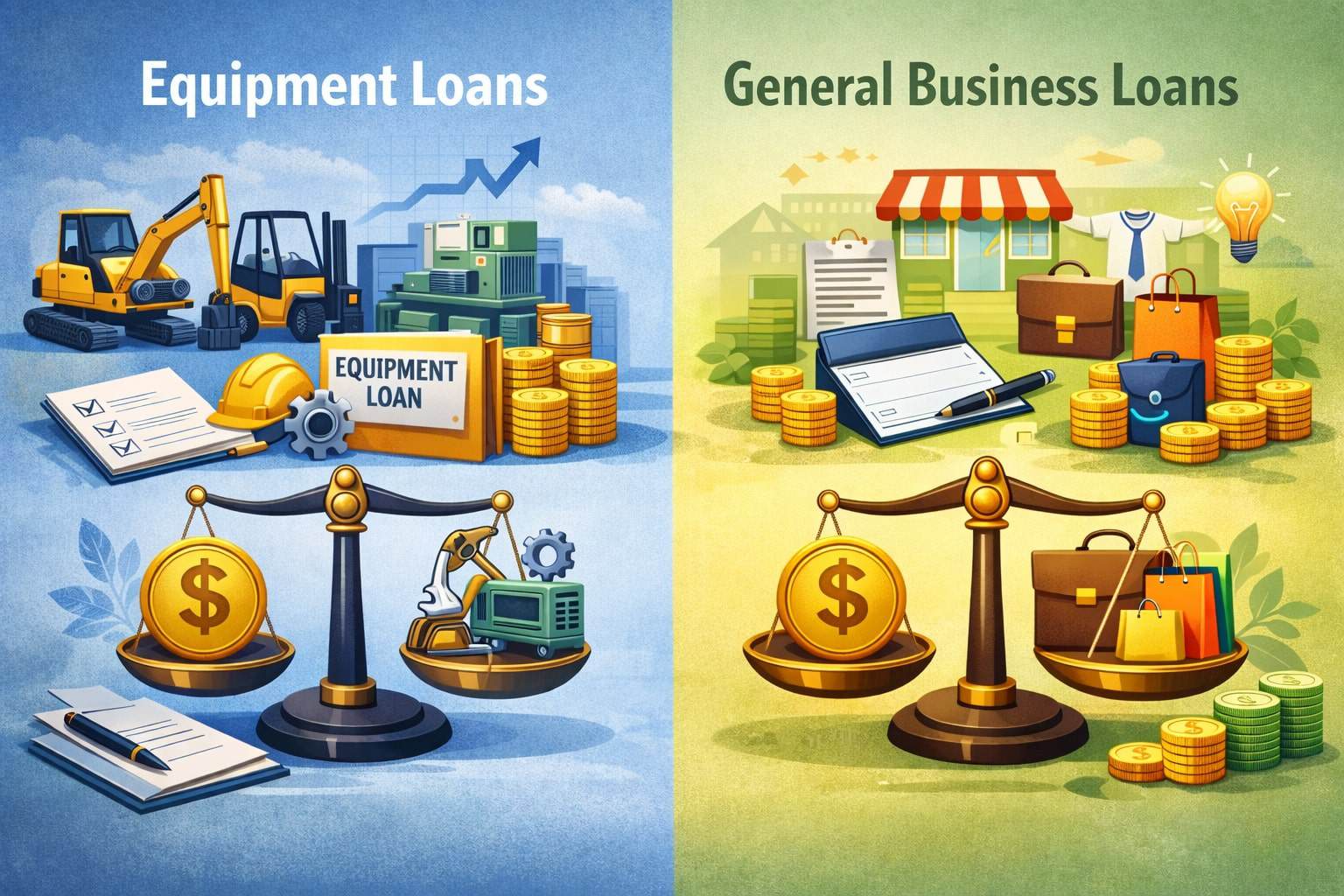
Equipment loans are designed to finance specific assets (like machinery, vehicles, POS systems, medical devices, or construction equipment). General business loans are broader-purpose funding that can support working capital, hiring, marketing, renovations, inventory, or multi-purpose expansion.
In 2026, borrowers are also navigating tighter underwriting in many channels, shifting fee structures in government-backed options, and a more tech-driven lending ecosystem.
For example, SBA program fees and rules can change by fiscal year, and lenders are increasingly using automation and data-driven models to speed approvals and refine risk scoring.
This guide breaks down equipment loans vs general business loans in plain English, with detailed comparisons, qualification factors, cost drivers, tax considerations, and future-forward predictions—so you can choose the best financing strategy for your business stage.
What Equipment Loans Are and How They Work

Equipment loans are financing products built specifically to purchase (or sometimes refinance) business equipment. The equipment itself usually acts as collateral, which lowers the lender’s risk and can improve approval odds compared with unsecured borrowing.
In many deals, the lender files a UCC lien on the asset. If the borrower defaults, the lender can repossess the equipment to recover losses—one reason equipment loans may offer competitive pricing relative to broader-purpose funding.
A typical equipment loan structure includes a fixed loan amount tied to the invoice or purchase price, a term aligned to the useful life of the asset, and predictable monthly payments.
Many lenders prefer equipment with stable resale value (commercial vehicles, machining tools, medical equipment, printing equipment, etc.). Newer equipment and well-known brands can sometimes qualify for better terms because liquidation is easier if something goes wrong.
Equipment loans also tend to be faster to underwrite than general-purpose loans because the “use of funds” is narrow and verifiable. Your lender can evaluate the asset, supplier, warranty, and resale value as part of the credit decision.
In a market where digital lending tools and automated verification are expanding, equipment lending is also becoming more streamlined—especially when integrated into point-of-sale or vendor financing programs.
If your top priority is acquiring a revenue-producing asset while preserving cash reserves, equipment loans often match the job perfectly.
What General Business Loans Are and How They Work
General business loans are designed for flexibility. Instead of financing one specific asset, you can use the funds for many business needs—working capital, payroll, inventory, marketing, renovations, opening a second location, seasonal slowdowns, or consolidating higher-cost obligations (when allowed by the lender).
This flexibility is the main advantage—and also the reason lenders often underwrite them more conservatively. A general business loan may be structured as a term loan (fixed repayment period), a revolving line of credit (borrow, repay, borrow again), or a hybrid product.
Because the lender can’t always tie repayment to a single resalable asset, these loans may rely more heavily on your business cash flow, time in business, credit profile, and debt-service coverage ratio (DSCR). Some products are secured (by general business assets or personal collateral), while others are unsecured but priced higher.
For growing businesses, general business loans can function like “growth oxygen”—especially when expansion costs aren’t limited to equipment. Think about a new location: you might need signage, permits, buildout, staffing, inventory, and a marketing push.
That’s a classic case where general business loans can outperform equipment loans because the spending is spread across multiple categories.
When your need is broad—and you want one financing solution instead of stitching together multiple loans—general business loans are usually the more practical option.
Core Differences Between Equipment Loans and General Business Loans

When comparing equipment loans vs general business loans, the most important differences come down to: use of funds, collateral, terms, underwriting logic, and risk. Equipment loans are purpose-built for acquiring a specific asset. General business loans are flexible funding for broad operational needs.
Collateral is the clearest divider. With equipment loans, the asset is usually the primary collateral, so lenders can sometimes accept thinner financials if the equipment is strong and the down payment is reasonable.
With general business loans, collateral can vary—from blanket liens on business assets to no collateral at all—so lenders lean more on cash-flow strength and borrower profile.
Loan terms also differ. Equipment loans are often aligned with the expected life of the equipment, so you’re not paying for an asset long after it stops producing value. General business loans may be shorter or longer depending on purpose and lender appetite, but the term doesn’t automatically match any single asset’s lifespan.
Finally, the “why” behind underwriting differs. In equipment loans, lenders often ask: “Will this asset generate enough value, and can we resell it if needed?” In general business loans, the lender asks: “Is this business reliably profitable, and is its cash flow strong enough to cover repayment even if sales dip?”
This is why the right choice is rarely about which loan is “better.” It’s about which loan is a better match to your business goal and risk profile.
Collateral, Liens, and Asset Ownership: What You’re Really Agreeing To
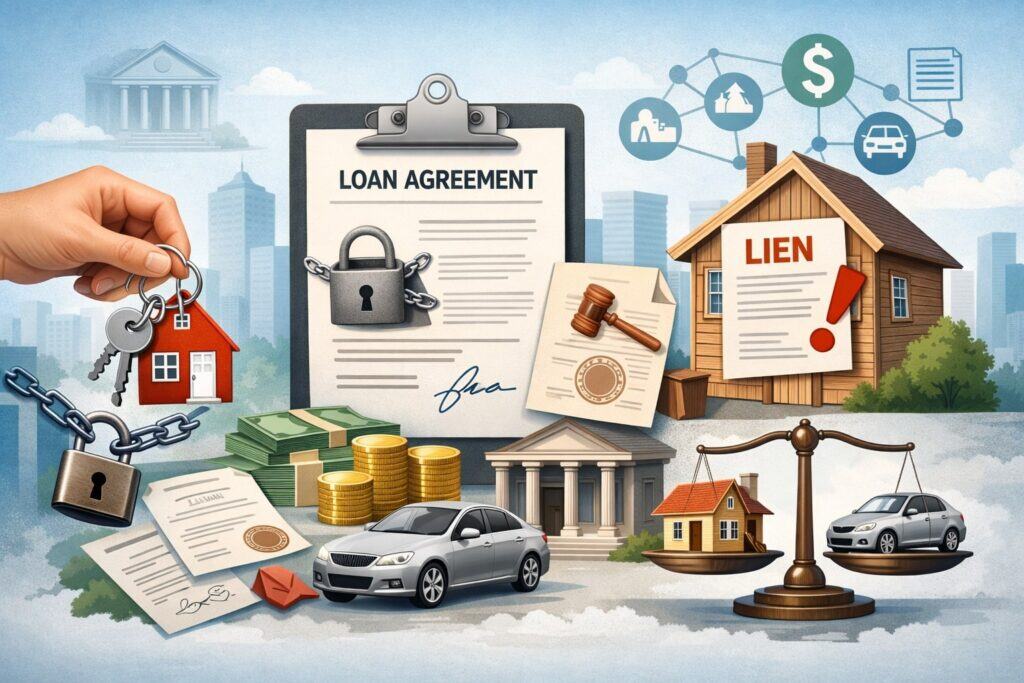
Collateral terms can quietly drive the true cost and risk of your loan. With equipment loans, the lender usually takes a security interest in the equipment. This can be straightforward: the lender funds the purchase, and the equipment backs the deal.
But you should still read the fine print because some lenders file broader liens or include cross-collateral clauses—especially if your credit file is thin.
With general business loans, collateral can be more complex. Many term loans and lines of credit come with a blanket UCC lien on business assets (accounts receivable, inventory, equipment, and sometimes intangibles).
That means even if you use the money for marketing, the lender may have a claim on assets unrelated to that spend. In practical terms, a blanket lien can make it harder to refinance or add another lender later, because new lenders don’t want to be behind an existing lien.
Ownership also matters. In a true equipment loan, you typically own the equipment (subject to the lender’s lien). In a lease, the lessor may own it until a buyout.
That difference can affect taxes, insurance obligations, and what happens if you want to upgrade early. If flexibility is crucial, negotiating upgrade paths, early payoff terms, and buyout language can be just as important as the interest rate.
This is why borrowers comparing equipment loans vs general business loans should evaluate more than monthly payment. You’re also choosing how much of your business balance sheet you’re pledging.
Approval Factors and Qualification Requirements in 2026
In 2026, lenders commonly evaluate both loan types using a similar core toolkit: business revenue, profitability, time in business, credit history, bank statements, existing debt obligations, and industry risk. But the emphasis shifts depending on whether you’re applying for equipment loans or general business loans.
For equipment loans, the lender often cares about the equipment’s resale value, supplier credibility, and whether the asset is essential to operations. A strong equipment quote or invoice can speed the process.
Many lenders also like equipment that is easy to appraise and liquidate. If the asset is highly specialized or software-heavy with limited resale value, you may see higher rates or a larger down payment requirement.
For general business loans, cash-flow reliability is usually the headline. Lenders look for stable deposits, healthy margins, manageable existing debt, and a DSCR that shows you can cover loan payments with room to spare. They may also scrutinize seasonality, customer concentration, and recent volatility.
Government-backed lending can introduce additional rules and documentation, and those rules can evolve. For example, SBA programs publish updated fee schedules and guidance by fiscal year, which can affect overall borrowing costs and timelines.
In addition, some channels have tightened underwriting in response to rising delinquencies, making documentation quality and borrower readiness even more important.
Rates, Fees, and Total Cost: How to Compare Loans the Right Way
Comparing the true cost of equipment loans vs general business loans requires more than looking at an advertised rate. Borrowers should evaluate APR (or an APR-like all-in cost), origination fees, documentation fees, closing costs, prepayment penalties, and required insurance.
Equipment loans can look cheaper because collateral reduces risk. But the loan might include fees for filing liens, equipment evaluations, or documentation. Some lenders charge higher rates for used equipment or for industries they view as volatile.
Others offer better pricing when the equipment is new, financed through approved vendors, or bundled into preferred financing programs.
General business loans can vary widely. Bank term loans may be very competitive for strong borrowers, while online products may price higher but fund faster. Lines of credit may charge interest only on drawn amounts, but they can include draw fees or annual maintenance fees.
Prepayment terms deserve special attention. If you plan to refinance or upgrade equipment early, a steep prepayment penalty can erase the benefit of a slightly lower rate. Similarly, some products calculate interest in ways that make early payoff less rewarding. Always request a payoff example, not just a rate quote.
In 2026, lenders are also leaning more into digital underwriting and automated decisioning, which can shorten funding times but may increase “risk-based pricing” variability—meaning two borrowers with similar revenue can receive different offers based on data patterns and industry categories.
A clean cost comparison happens when you put competing offers into the same frame: total paid over time, flexibility, and the risk you’re accepting through collateral and covenants.
Cash Flow Impact: Payment Structures, Seasonality, and Flexibility
Cash flow is where loan choice becomes painfully real. An affordable monthly payment on paper can still be a bad fit if it doesn’t match how your business earns revenue.
Equipment loans often come with predictable fixed payments, which is great for planning. If the equipment directly produces revenue—like a delivery vehicle, CNC machine, commercial oven, or medical device—those fixed payments can feel like a “productive expense.” But if revenue ramps slowly, a fixed payment can strain early months.
General business loans offer flexibility in use of funds, but not always in repayment. Many term loans still require fixed monthly payments. Lines of credit can be more flexible, especially for seasonal businesses, because you borrow when needed and repay as cash comes in.
If you have peaks and valleys—holiday surges, weather-driven demand, or contract-based cash cycles—a line of credit or seasonal structure may be smarter than a standard term loan.
When comparing equipment loans vs general business loans, match the repayment schedule to your revenue pattern. If the asset will pay for itself quickly, a shorter equipment loan term may reduce total interest.
If your expansion needs include payroll and marketing before revenue grows, a general business loan with manageable payments and a cushion of working capital can prevent stress borrowing later.
Also consider the “stacking” effect: taking multiple loans at once can reduce flexibility and increase default risk. Sometimes the best answer is a hybrid approach—equipment loan for the asset plus a small line of credit for operating buffer.
Tax Considerations: Deductions, Depreciation, and Timing Strategies
Taxes can materially change the economics of buying equipment. Many businesses use depreciation strategies to reduce taxable income when they invest in qualifying equipment. In 2026 planning, Section 179 expensing and bonus depreciation are frequently discussed tools, but eligibility depends on your asset type, business structure, and tax situation.
Published guidance and summaries for 2026 commonly cite a Section 179 maximum deduction in the multi-million-dollar range with a phase-out threshold that begins when total qualifying purchases exceed a higher cap.
Because these thresholds and bonus depreciation rules can change with legislation, your best move is to confirm current-year limits with a qualified tax professional before you time a major purchase.
From a financing perspective, the key idea is this: financing equipment doesn’t necessarily prevent you from taking depreciation deductions—because deductions are generally tied to placing the asset in service and ownership treatment, not whether you paid cash.
But the details matter. Leases, buyouts, and who is treated as the “owner” for tax purposes can change outcomes.
General business loans don’t create depreciation benefits directly because the loan isn’t tied to an asset. But they can still support deductible business expenses (like marketing or payroll), depending on how funds are used and documented.
If you’re comparing equipment loans vs general business loans for a big purchase, tax timing can tip the scale. Buying and placing equipment in service before year-end may create a larger deduction window—while delaying could shift deductions to the next year.
Best Use Cases for Equipment Loans
Equipment loans shine when the purchase is clear, essential, and tied to productivity. Common high-fit scenarios include replacing aging machinery, expanding fleet capacity, upgrading technology to improve throughput, or acquiring specialized tools required for contracts.
A strong equipment loan use case usually has three traits:
- The asset is revenue-linked: The equipment directly supports production, delivery, billable work, or measurable efficiency.
- The equipment holds value: Lenders like assets that are easy to evaluate and resell.
- The purchase is discrete and verifiable: A quote, invoice, or vendor contract clearly shows where funds go.
This is also why equipment loans often work well for businesses that are growing but want to preserve cash. Instead of draining reserves for a large purchase, you spread cost over time while the equipment helps generate returns.
In 2026, equipment finance demand has remained resilient in many sectors, supported by ongoing investment in productivity and modernization. At the same time, lenders are increasingly offering faster approvals through vendor partnerships and digital workflows.
If your goal is “get the asset, start earning, and keep cash in the business,” equipment loans are often the cleanest fit.
Best Use Cases for General Business Loans
General business loans are ideal when your needs are mixed, your growth plan has multiple moving parts, or your biggest constraint is working capital rather than a single asset.
Typical strong-fit scenarios include opening a new location, hiring staff ahead of demand, scaling marketing, building inventory for a busy season, smoothing cash flow during slow months, and consolidating certain business debts (when permitted).
In these cases, equipment loans can feel too narrow because you’re not just buying one item—you’re funding an expansion “bundle.” General business loans also work well when you already own the equipment you need, but you need liquidity for operations.
For example, a service business might have vehicles and tools already, but needs funding to hire technicians, purchase materials, and cover payroll until invoices are paid. That’s a working capital problem, not an equipment problem.
Another advantage is optionality. A general business loan can act as a buffer against surprises—repair costs, supplier price jumps, delayed receivables, or temporary demand drops. But that same flexibility increases lender risk, so underwriting often demands stronger cash flow or additional guarantees.
If you’re comparing equipment loans vs general business loans and your plan includes multiple categories of spending, general business loans tend to reduce friction. Instead of managing separate approvals, liens, and repayment schedules, you can simplify your capital structure.
SBA-Backed Options: Where Equipment and General Financing Overlap
Many borrowers consider government-backed lending when they want longer terms, larger amounts, or more accessible approval compared with conventional bank credit. These programs can support both equipment and general business needs, depending on the structure.
SBA 7(a) loans are commonly used for working capital, expansion, refinancing, and sometimes equipment—while SBA 504 loans are often associated with major fixed assets like real estate and large equipment in certain setups. The real-world fit depends on eligibility, project structure, lender participation, and current program rules.
What matters in 2026 is that fees and program guidance can be updated for the fiscal year. SBA publishes official notices covering fee schedules and clarifications, and those changes can affect total cost and timeline.
Separately, industry and media reporting has highlighted periods where underwriting tightened due to program performance concerns, which can influence approvals and documentation requirements.
For borrowers weighing equipment loans vs general business loans, the SBA channel can blur the line: you might use one SBA-backed loan for a combined expansion that includes equipment, buildout, and working capital. The tradeoff is usually more paperwork and longer processing—often worth it when pricing and term length are compelling.
Leasing vs Borrowing: Where Equipment Loans Fit Against Equipment Leases
A common point of confusion is that equipment financing isn’t only “equipment loans.” It also includes leases—operating leases, capital leases, $1 buyouts, fair market value leases, and other structures.
Equipment loans typically mean you’re financing a purchase and gaining ownership (subject to lien). Equipment leases can offer lower payments, upgrade flexibility, and simpler end-of-term options—but sometimes at a higher total cost, depending on buyout and residual terms.
If your equipment becomes obsolete quickly (tech hardware, certain medical devices, specialized software-driven machines), a lease can reduce the pain of being stuck with outdated assets. If you want long-term ownership and maximum control, an equipment loan may be better.
From an SEO and decision standpoint, this matters because many businesses searching for “equipment loans” are really searching for “equipment financing.”
When comparing equipment loans vs general business loans, you should also ask: “Do I even want to own this equipment?” Sometimes the best answer is an equipment lease plus a smaller general business loan or line of credit for operating needs.
How to Choose: A Practical Decision Framework
A smart financing decision is less about rates and more about alignment—alignment between the loan type, the purpose, your cash cycle, and your risk tolerance.
Use this framework:
Choose equipment loans when:
- The purchase is clearly defined and invoice-backed.
- The asset will produce revenue or measurable efficiency.
- You want the equipment to serve as collateral.
- You prefer matching repayment to the asset’s useful life.
Choose general business loans when:
- Your spending needs span multiple categories.
- You need working capital, payroll, marketing, or inventory support.
- You want flexibility to adapt your plan as conditions change.
- You can qualify based on cash flow and broader underwriting.
Then run a “stress test.” Assume revenue dips for 60–90 days. Which loan structure would be easier to manage without missing payments? Also evaluate whether liens or covenants could restrict future borrowing.
In 2026, with lenders increasingly using automated decisioning and risk-based pricing, the “best loan” is often the one you can qualify for cleanly and repay comfortably—not the one with the lowest headline rate.
Future Predictions: Where Equipment Loans and General Business Loans Are Headed
The next few years are likely to reshape how businesses access capital—especially for equipment purchases.
- Embedded equipment financing will expand: More equipment vendors will offer financing at checkout or inside their sales process, shortening time-to-approval and improving conversion. Digital lending platforms and vendor partnerships support this shift.
- Underwriting will become more data-driven: Lenders will increasingly integrate bank data, accounting system data, and asset-level performance signals. AI-assisted underwriting is already a major trend discussed across equipment finance.
- Flexible models will grow: Expect continued growth in usage-based or cash-flow-aligned structures for certain equipment categories, especially where IoT or utilization data can inform risk.
- Program rules and borrower requirements can tighten or loosen: Government-backed channels may continue adjusting fees, documentation, and risk controls in response to portfolio performance.
For borrowers, the implication is clear: the “best” financing path may increasingly depend on how well you package your data, document your plan, and choose a product that matches your operational reality.
FAQs
Q.1: Are equipment loans easier to get than general business loans?
Answer: Often, yes—because the equipment serves as collateral, which can reduce lender risk. But approval still depends on your credit profile, time in business, cash flow, and the equipment type.
Highly specialized assets can be harder to finance than common equipment with predictable resale value. In 2026, automated underwriting and vendor financing programs can also make equipment approvals faster when the deal is straightforward.
Q.2: Can I use a general business loan to buy equipment?
Answer: Usually yes, but it depends on lender rules. Many general business loans allow equipment purchases, but the loan won’t be structured around the asset’s value the way equipment loans are.
That can mean different pricing, different collateral requirements, and a repayment schedule that may or may not match the equipment’s useful life.
Q.3: What’s cheaper: equipment loans or general business loans?
Answer: It depends. Equipment loans can be cheaper because they’re collateralized. General business loans can be very competitive for strong borrowers, especially through banks. But total cost also depends on fees, repayment terms, and prepayment penalties. Always compare offers using total repayment and flexibility, not just the interest rate.
Q.4: Do equipment loans require a down payment?
Answer: Many do, but not all. Down payment requirements depend on credit strength, time in business, equipment type, and whether it’s new or used. A down payment can improve terms and reduce risk—especially if the equipment depreciates quickly.
Q.5: Are there tax advantages to financing equipment?
Answer: Tax benefits generally come from depreciation rules and how the asset is treated for tax purposes, not from whether you paid cash.
For many businesses, Section 179 expense and bonus depreciation may allow large deductions when equipment is placed in service, subject to current-year limits and eligibility. Always confirm details with a qualified tax professional.
Q.6: When should I avoid an equipment loan?
Answer: Avoid an equipment loan if your biggest need is working capital, if the equipment won’t drive measurable returns, or if the repayment schedule will strain cash flow. Also be cautious if the loan includes restrictive liens, expensive insurance requirements, or steep prepayment penalties that block upgrades or refinancing.
Q.7: When should I avoid a general business loan?
Answer: Avoid a general business loan if you only need one asset and can qualify for equipment financing with better collateral-based pricing. Also avoid it if the lender requires a blanket lien that will restrict your future borrowing, or if you’re using long-term debt to solve a short-term cash flow problem without fixing the root cause.
Conclusion
The right answer to equipment loans vs general business loans depends on what you’re funding and how your business earns.
Choose equipment loans when you’re buying a specific, revenue-producing asset and want the equipment to serve as collateral—often improving terms and keeping more cash in the business.
Choose general business loans when your plan includes multiple spending categories or you need flexible working capital to stabilize and scale operations.
In 2026, your best move is to compare offers by total cost, lien structure, repayment flexibility, and how well the payment schedule matches your cash cycle. Also consider tax timing for equipment investments and keep an eye on program fee updates and underwriting shifts where applicable.