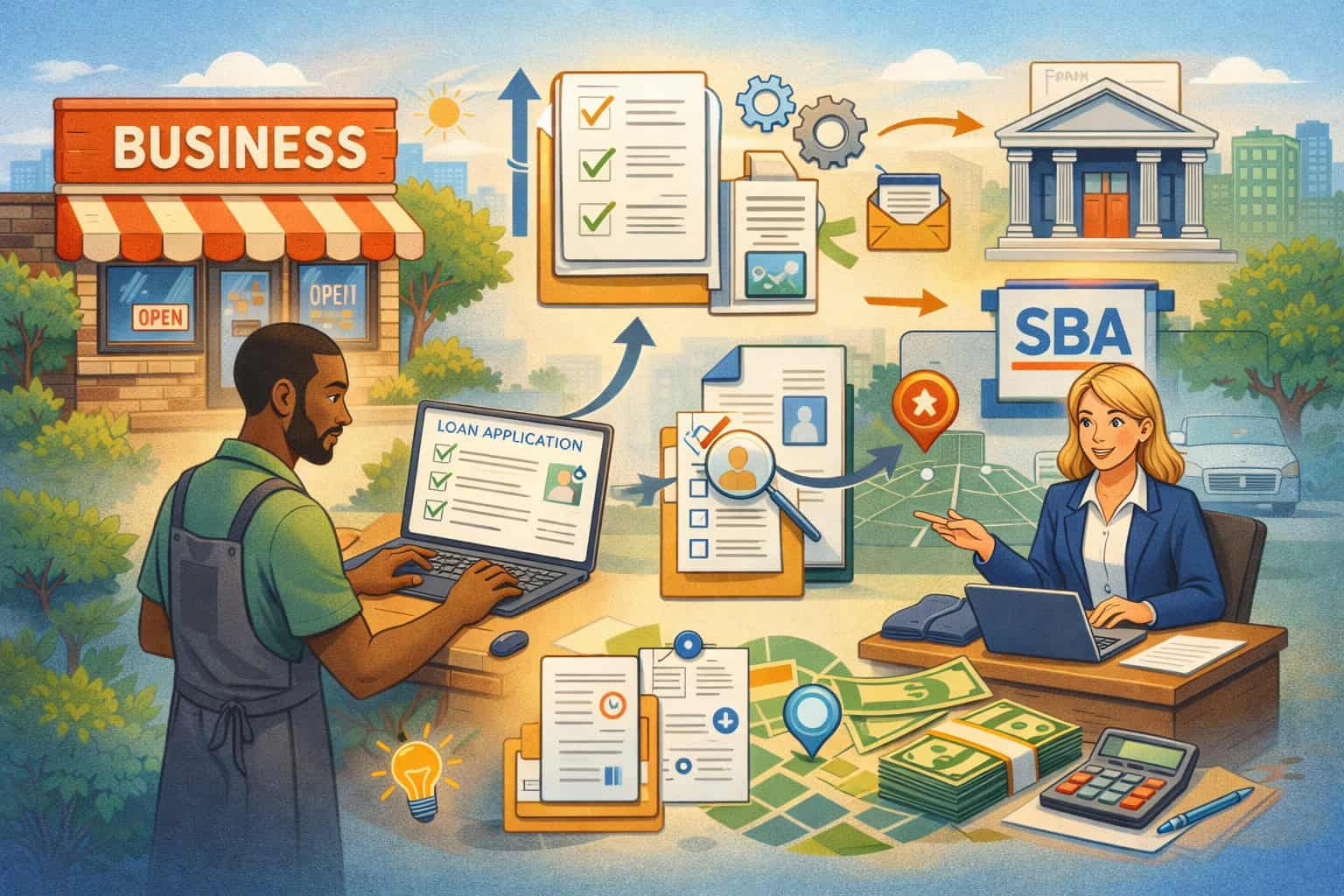
How to Apply for a Community Advantage Loan: A Step-by-Step Guide for Small Business Owners
Access to funding is one of the biggest challenges small business owners face. A promising company may have loyal customers, a workable plan, and clear demand, yet still struggle to qualify for financing because it is new, has limited collateral, operates in a lower-income area, or does not fit the profile many traditional lenders prefer.
That gap is exactly why Community Advantage financing matters. It was designed to expand access to capital by connecting small businesses with mission-focused lenders that understand local markets and are often more experienced in working with newer businesses, underserved entrepreneurs, and borrowers who may need more guidance through the loan process.
Today, Community Advantage lending operates through Community Advantage Small Business Lending Companies within the SBA’s 7(a) framework, giving qualified borrowers another path to funding through approved mission-based lenders.
If you are trying to understand the Community Advantage loan application process, this guide walks you through what the program is, who it is built for, what lenders look for, how to prepare your documents, and how to improve your odds of approval.
Whether you are launching a young business, buying equipment, stabilizing cash flow, or expanding into a larger space, this article will help you approach the application with more clarity and confidence.
What Is a Community Advantage Loan?
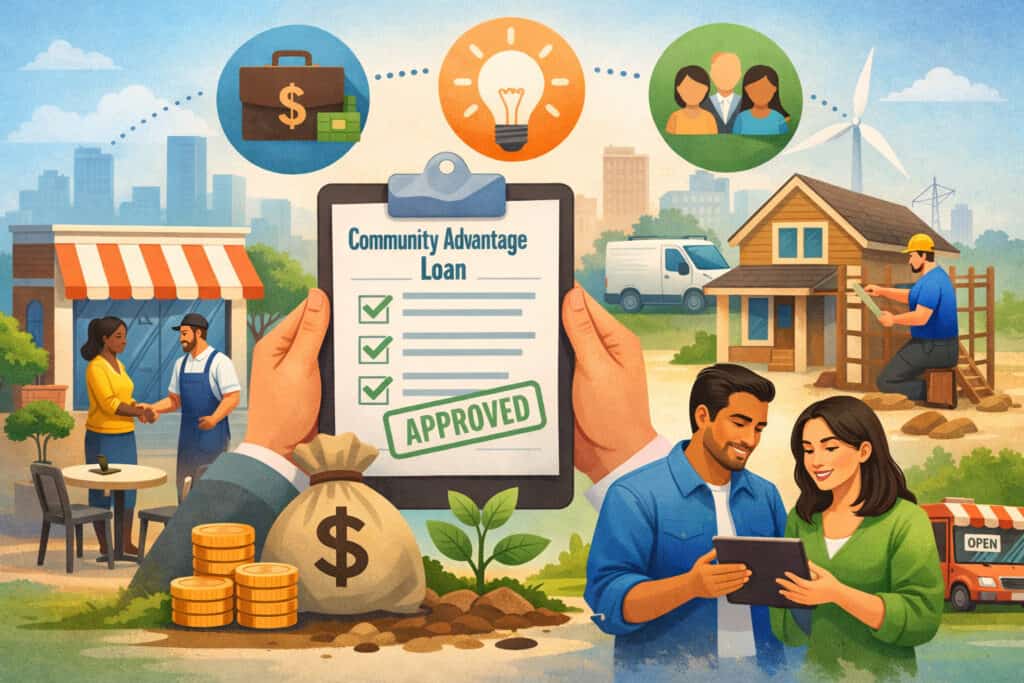
A Community Advantage loan is a type of SBA-backed small business financing delivered by mission-oriented lenders that focus on businesses in underserved markets.
These lenders may include nonprofit financial intermediaries and other specialized lenders that are set up to serve borrowers who might have a harder time accessing traditional bank financing.
Community Advantage lending now exists through Community Advantage Small Business Lending Companies as part of the broader 7(a) lending system.
In practical terms, that means the lender makes the loan, and the SBA provides a guarantee on part of it. Because the lender’s risk is reduced, more borrowers can be considered than might qualify for a standard conventional business loan.
This matters for owners who have a shorter operating history, less collateral, or need lender guidance during the application process.
Unlike grants, these funds must be repaid. But compared with many alternative financing products, SBA-backed loans often offer more manageable terms and lower overall borrowing costs.
Community Advantage loans are meant to support real business needs such as working capital, equipment, debt refinancing, ownership changes, and certain expansion projects, subject to lender approval and SBA rules.
SBA notes that 7(a) loans can be used for working capital, equipment, real estate, debt refinancing, furniture and fixtures, and changes of ownership, among other eligible uses.
How the SBA Community Advantage program works
The easiest way to understand the program is to think of it as a lender-guided version of SBA-backed financing for borrowers who may need a more flexible or community-focused entry point.
Instead of going straight to a large bank, a borrower works with an approved Community Advantage lender that understands the needs of startups, underserved borrowers, and smaller loan requests.
These lenders still follow SBA rules, underwriting standards, and documentation requirements. However, they are often more hands-on. Many help borrowers organize financial statements, review a business plan, understand repayment expectations, and fix weaknesses before the file goes to approval. That extra support can make a major difference for first-time borrowers.
Community Advantage lenders are intended to serve underserved markets, and the SBA has described them as mission-oriented intermediaries focused on making smaller loans to businesses that may not be well served by conventional channels.
SBA materials also note that the lending maximum for this channel was increased, while the broader 7(a) program has a higher overall cap.
Who the program is designed for
This program is especially useful for borrowers who are capable of running a viable business but may not look perfect on paper to a traditional bank. That includes owners with limited collateral, startups with a solid plan but short history, businesses in lower-income communities, and entrepreneurs who need smaller loan amounts plus guidance.
Community Advantage financing is often discussed alongside small business loans for underserved communities because the lending model is built around access.
That can include businesses owned by women, veterans, minorities, rural entrepreneurs, low-to-moderate income borrowers, and owners in areas where mainstream business lending has historically been harder to obtain.
SBA has repeatedly described Community Advantage as a way to connect underserved small businesses with capital through mission-based lenders.
That does not mean every applicant will be approved simply because they fall into one of those groups. Lenders still need to see that the business is eligible, the loan request makes sense, and repayment appears realistic. But the program is designed so that strong borrowers with nontraditional profiles are not automatically left out.
Why Small Business Owners Choose Community Advantage Financing

The Community Advantage loan application is appealing because it combines the structure of SBA-backed lending with the accessibility of mission-based underwriting. For many owners, that balance is exactly what makes the program worth pursuing.
Traditional banks often prefer established businesses with strong credit, solid collateral, several years of profitable operations, and a straightforward borrowing request. That works for some companies, but not for every owner.
A business that is growing fast, moving into a larger location, recovering from past setbacks, or operating in an underserved neighborhood may still be creditworthy even if it does not check every traditional box.
Community Advantage financing can create a middle ground. The program may be easier to approach than conventional financing, while still giving borrowers a more stable long-term option than many high-cost online products. That makes it especially relevant for owners who need capital but want to avoid expensive short-term funding that can strain cash flow.
Key benefits of the program
One of the strongest benefits is access. Community Advantage lenders are supposed to serve markets that are often overlooked, which gives more entrepreneurs a realistic opportunity to be considered. That alone can make the program valuable.
Another major benefit is lender support. Many borrowers are capable of repaying a loan but are not experienced in packaging an application. A mission-based lender may help you tighten your business plan, explain your projections, identify missing documents, and present the request more clearly.
Other benefits may include:
- Loan structures that are often more affordable than many nonbank short-term products
- Funding that can be used for a wide range of legitimate business purposes
- A lender relationship that includes coaching and technical assistance
- Better fit for smaller loan requests and growing businesses
- A more realistic path for first-time borrowers who are not yet “bank perfect”
Because Community Advantage lending sits within the 7(a) ecosystem, borrowers may also benefit from the flexibility of that broader program structure. SBA describes 7(a) as its primary business loan program and states that it supports a wide variety of business uses.
When it may be a better fit than a conventional loan
A conventional business loan can be a great option when your company has strong revenue, clean financial statements, significant collateral, and a lender-ready profile. But many newer or underserved businesses are still building toward that stage.
Community Advantage may be a better fit when your business is viable but not yet ideal for a bank’s conventional underwriting. For example, you may have a good repayment story but only modest collateral. Or your business may be newer, but you can show strong demand, industry experience, and improving financial performance.
It can also be a better fit if you value guidance. Some borrowers do not just need money. They need help understanding how to apply for SBA Community Advantage loan funding correctly, which documents matter, how projections should be explained, and how to answer lender questions without weakening the file.
Community Advantage Loan Requirements Explained Clearly
When people search for Community Advantage loan requirements, they often expect a single checklist with hard yes-or-no rules. In reality, eligibility and approval involve layers. First, the business must meet SBA program rules. Then, the lender must determine that the specific request makes sense and can be repaid.
That means there is no one universal approval formula. Still, most applicants will be evaluated around the same core issues: business eligibility, owner background, use of proceeds, credit profile, repayment ability, and documentation quality.
Below is a practical breakdown of what lenders usually want to see.
Basic business qualifications
At the broadest level, the business must generally qualify as a small business under SBA size standards and operate as an eligible for-profit business.
The owner must also be able to show that the business is located and operating legally, with required licenses or registrations where applicable. SBA’s 7(a) program sets baseline terms and eligibility guidelines for participating lenders.
Lenders also want a clear explanation of what the money will be used for. Vague requests tend to cause delays. “Working capital” can be acceptable, but it needs context. Are you covering seasonal inventory, payroll during a growth phase, receivables gaps, or marketing tied to expansion? The more specific you are, the easier it is for a lender to assess the purpose.
The business should also show reasonable management ability. This does not always mean years of ownership experience. It can also mean industry knowledge, a capable operating team, strong bookkeeping habits, or a track record in a related role.
Owner, credit, and repayment expectations
There is no single public minimum score that guarantees approval, but both business and personal credit can matter. For many small businesses, especially newer ones, lenders review the owner’s personal credit as part of the risk picture.
They want to understand how debt has been managed, whether major delinquencies exist, and whether past issues have been resolved.
Repayment capacity is even more important than a credit score by itself. Lenders need to see that the business can support the payment. That means your financial statements, tax returns, bank statements, and projections should work together to tell a believable story.
You should also expect questions about:
- Existing business debt
- Any prior government financing
- Tax payment status
- Judgments or liens
- Ownership structure
- Affiliates or related businesses
- Whether owners are willing to provide guarantees when required
SBA Form 1919 is used in the 7(a) process to collect borrower information about the applicant, owners, debt, prior government financing, and related matters, which shows the level of detail lenders expect in the application stage.
Community Advantage Loan Eligibility: Who Can Qualify?
Community Advantage loan eligibility is not limited to one type of business owner. The program was built to widen access, but it still requires a credible business case. The best way to think about eligibility is this: you do not have to be perfect, but you do need to be fundable.
Many eligible applicants fall into one or more of the following groups: newer businesses, owners in underserved communities, companies seeking smaller loan amounts, borrowers with limited access to traditional bank credit, and startups with a strong plan plus management capacity.
SBA has consistently described Community Advantage as serving underserved markets through mission-based lenders.
Startups, newer businesses, and underserved borrowers
One reason the program gets attention is that it can be more accessible for startups and growing businesses than standard bank lending. A newer business may still be able to qualify if the owner brings relevant industry experience, contributes some equity, presents a sound plan, and shows how the company will realistically make payments.
That makes Community Advantage especially relevant as business funding for startups and underserved borrowers. A brand-new company with no customers and no preparation will still have trouble getting approved. But a startup with signed contracts, owner investment, useful experience, and realistic projections may have a stronger case than many people assume.
Underserved borrowers benefit because mission-driven lenders often understand local economic realities. They may be more willing to evaluate the full picture rather than rejecting an applicant early based on one weakness. That can be meaningful for owners in lower-income neighborhoods, rural areas, or markets where credit access has historically been limited.
For a broader look at early-stage funding strategies, readers may also find it useful to review startup funding options for businesses without established revenue.
Businesses that may struggle to qualify
Not every business will meet program or lender expectations. A borrower may struggle if the business is in an ineligible industry, has unresolved tax problems, cannot explain its financials, has severe recent credit issues with no recovery story, or is asking for funds without a clear business use.
Lenders also become cautious when records are disorganized. A business may be profitable in reality, but if the tax returns, bank statements, and internal financials do not line up, the file becomes harder to approve. Inconsistency creates doubt.
Some owners also run into trouble because they apply too early. They may have enthusiasm but no real operating plan, weak bookkeeping, and no idea how much funding they actually need. Community Advantage is more flexible than many options, but it is still a business loan, not rescue money for an unprepared idea.
How Community Advantage Compares With Other SBA Loan Programs
If you are reviewing an SBA Community Advantage program guide, one of the smartest questions to ask is whether this is the best SBA path for your specific need. Community Advantage is not the only option, and it may or may not be the strongest fit depending on your business profile and loan purpose.
The broader SBA 7(a) program is the main umbrella for general-purpose small business loans. The SBA also supports 504 loans for certain fixed-asset projects and microloans through intermediaries for smaller funding needs.
SBA’s funding pages and 7(a) overview show that these programs are designed for different business uses and borrower situations.
Community Advantage vs standard 7(a)
A standard 7(a) loan is often offered by banks, credit unions, and other approved lenders. Community Advantage lending also sits within the 7(a) structure, but it is delivered by mission-focused lenders serving underserved markets. The most practical difference for many borrowers is the lender relationship and borrower profile.
A standard 7(a) loan may work well if your business has strong financials and you are already attractive to a bank. Community Advantage may work better if you need a more hands-on lender, you are borrowing a smaller amount, or your business is viable but less conventional from an underwriting standpoint.
Here is a simple comparison:
| Feature | Community Advantage | Standard 7(a) |
| Typical lender type | Mission-based SBA-approved lender | Bank, credit union, or SBA-approved lender |
| Borrower profile | Often geared toward underserved, newer, or smaller borrowers | Broad range of small businesses |
| Support level | Often more hands-on during application | Varies widely by lender |
| Loan use | General eligible business purposes | General eligible business purposes |
| Best fit | Borrowers who need access plus guidance | Borrowers with stronger conventional profiles |
The loan purpose rules still come from the 7(a) framework, but the experience may feel different depending on the lender.
Community Advantage vs microloans, 504 loans, and other options
Microloans are usually smaller and can be a good fit if your funding need is modest. They may work well for inventory, supplies, smaller equipment needs, or very early-stage businesses. A 504 loan, on the other hand, is usually aimed at major fixed assets such as owner-occupied commercial real estate or large equipment.
Community Advantage is more flexible for general business purposes than a 504 loan, and it may provide larger funding than a microloan. That makes it a useful middle-ground option for working capital, equipment, debt refinance, or expansion.
If Community Advantage is not available or not a fit, alternative SBA loan options may include:
- Standard 7(a) term loans
- SBA microloans
- 504 financing for fixed assets
- SBA working capital programs through participating lenders
- Conventional bank loans
- Community development financial institution financing
- Equipment financing
- Business lines of credit
If you want a better sense of how lenders assess readiness across loan types, this article on getting approved for a small business loan offers a useful supporting read.
How to Prepare Before You Start the Community Advantage Loan Application
Good preparation can cut weeks off the SBA loan application process. It can also improve approval odds because it helps your lender review a clean, complete file instead of chasing missing information.
Many small business owners think the application starts when they fill out a form. In reality, the real application starts with preparation. If your records are accurate, your funding needs are clearly defined, and your story makes sense, the formal application becomes much easier.
Clarify exactly how much funding you need and why
One of the first mistakes borrowers make is asking for a round number with no support behind it. Lenders do not just want to know the amount. They want to know how you arrived at it.
Break the request into categories. For example, if you need working capital, calculate how much will go toward payroll support, inventory buildup, rent deposits, marketing, or seasonal operating needs. If you are buying equipment, gather actual quotes. If you are refinancing debt, list balances, rates, and monthly payments.
This step matters because lenders are evaluating whether the request is both reasonable and useful. Borrow too little and the loan may not solve the problem. Borrow too much and the request may appear inflated.
A strong funding request usually includes:
- Exact dollar amount requested
- Clear breakdown of use of proceeds
- Explanation of business impact
- Timeline for using the funds
- Expected repayment source
Get your financial records lender-ready
Your lender will likely ask for business tax returns, personal tax returns, profit and loss statements, balance sheets, bank statements, debt schedules, and possibly projections. If those documents are incomplete or inconsistent, the process slows down fast.
Before applying, compare your tax returns with your internal financials. Make sure sales totals are not materially different without explanation. Confirm that debt balances are accurate. Review business bank statements for unusual transfers or overdrafts that may need context.
If your bookkeeping is messy, fix it before you submit. That one step can improve both speed and credibility. You may also want to review practical loan application tips that improve approval odds before you assemble your package.
Step-by-Step Guide to Completing a Community Advantage Loan Application
The phrase “Community Advantage loan application” sounds simple, but the actual process includes several stages. It is not just a form. It is a package of documents, explanations, and lender discussions that build the case for approval.
Different lenders may have slightly different workflows, but the sequence below reflects the way many borrowers experience the process.
Step 1: Identify the right lender
The first step is finding an SBA-approved lender that offers Community Advantage financing or works within that channel. SBA maintains information about Community Advantage Small Business Lending Companies, and SBA’s Lender Match service can also help connect borrowers to participating lenders.
Do not choose a lender based only on proximity. Look for fit. Some lenders have more experience with startups, some with working capital, some with acquisition financing, and some with underserved communities. A lender that understands your business model can make the process smoother.
When you first speak with a lender, ask practical questions:
- What kinds of businesses do you work with most often?
- What loan sizes do you typically approve?
- What documents should I prepare first?
- How do you handle startups or newer businesses?
- What are the biggest issues that delay applications?
Step 2: Complete the intake or prequalification stage
Many lenders start with a pre-screening call, intake form, or short application. This helps them determine whether the request is worth pursuing before asking for a full package.
At this stage, you may provide basic information about:
- Business structure
- Time in business
- Revenue
- ownership
- requested amount
- use of proceeds
- personal credit range
- industry type
This is your chance to present the business clearly without overselling it. Keep your explanation simple and consistent. If your business has a weak point, such as a past credit issue or short operating history, explain it honestly and briefly, then show how the business is stronger now.
Step 3: Gather and submit your full documentation package
If the lender believes your request could fit, you will move into full application mode. This is where most of the work happens. Expect to provide a larger document package plus borrower forms.
SBA Form 1919 is commonly used in the 7(a) process, and lenders may also have their own application materials. SBA says this form collects borrower and ownership information, debt details, prior government financing, and other information used to determine eligibility.
Typical documents are covered more fully in the next section, but the key point here is completeness. A partial package often leads to follow-up requests, delays, and underwriter frustration.
Step 4: Respond to lender questions and underwriting review
Once your file is submitted, the lender reviews the package and may ask clarifying questions. This is normal. They may want an updated bank statement, explanation of a large deposit, a correction to ownership information, or more support for your projections.
Underwriting usually focuses on eligibility, repayment capacity, credit quality, management strength, and whether the use of proceeds is acceptable. The lender may also review collateral availability and guarantee requirements, depending on the structure of the request.
Treat this stage like a business conversation, not an interrogation. Fast, organized responses can help your file move forward. Slow or incomplete responses can make the process drag.
Step 5: Receive a decision, commitment, and move toward closing
If the lender approves the application, you will usually receive a commitment or term summary explaining the loan structure, conditions, and next steps. Read it carefully. Approval is good news, but it may still come with conditions to satisfy before closing.
Common conditions can include updated financials, proof of insurance, lease agreements, payoff letters for debt being refinanced, entity documents, or proof of owner cash injection if required.
After closing requirements are met, the loan moves to funding. Depending on the purpose, funds may be disbursed all at once or according to closing mechanics tied to the transaction.
Documents You Will Usually Need for a Community Advantage Loan Application
Document quality can make or break the process. Even a strong business can stall if the lender cannot verify key facts or has to keep asking for missing paperwork.
The exact list varies by lender and loan purpose, but most applicants should expect a fairly standard package.
Common documents lenders ask for
Here is a practical checklist of documents often requested during the Community Advantage loan application process:
| Document | Why it matters | Common borrower mistake |
| Business tax returns | Shows revenue history and filing consistency | Submitting incomplete returns |
| Personal tax returns | Helps evaluate owner financial responsibility | Forgetting schedules or signatures |
| Profit and loss statement | Shows current operating performance | Using outdated figures |
| Balance sheet | Shows assets, liabilities, and equity | Numbers do not match bookkeeping |
| Business bank statements | Helps verify cash flow trends | Unexplained transfers or overdrafts |
| Debt schedule | Shows current repayment obligations | Leaving out merchant cash advances or short-term debt |
| Business plan or summary | Explains the company and funding purpose | Too vague or overly promotional |
| Financial projections | Supports future repayment ability | Unrealistic growth assumptions |
| Ownership documents | Confirms entity structure and control | Missing operating agreement or formation docs |
| Identification and resumes | Verifies owners and management experience | Not explaining relevant industry background |
| Licenses or permits | Confirms legal operation | Missing local or industry licenses |
| Quotes or invoices for purchases | Supports use of proceeds | No documentation for equipment or project costs |
This checklist is not exhaustive, but it reflects what many borrowers should prepare before submitting a serious loan request.
Special items for startups and newer businesses
If your business is in its early stage, expect more scrutiny around planning and management. Lenders often need more forward-looking support because there is less operating history to review.
In that case, your business plan matters more. Your projections matter more. Your experience matters more. If you are opening a second location or expanding a proven concept, explain how your prior performance supports the new request.
A startup package may also benefit from:
- Owner resume showing industry experience
- Signed contracts, preorders, or letters of intent
- Market research tied to the location or target audience
- Break-even analysis
- Personal financial statement
- Explanation of owner cash contribution
If your credit profile needs work before you apply, this guide on improving your business credit before applying for a loan may help you strengthen the file.
How Lenders Evaluate Community Advantage Loan Applications
Understanding lender thinking can make you a much stronger applicant. Most borrowers focus on whether they qualify. Lenders focus on whether the deal works.
That means a lender is asking a series of practical questions: Is this business eligible? Does the request make sense? Can the company repay the loan? Do the records support the story? Is management capable? Are there risk factors that need explanation?
The five areas lenders tend to focus on
While every lender has its own process, many Community Advantage loan applications are evaluated around five core areas:
Cash flow and repayment ability
This is usually the biggest one. The lender wants to know whether the business can comfortably handle the proposed payment. Historical income matters, but so do trends, margins, seasonality, and debt obligations.
Credit profile
Lenders review personal and sometimes business credit to understand repayment behavior. A lower score is not always fatal, but serious unresolved issues can be.
Management strength
A capable owner with relevant experience can offset some risk. Lenders want confidence that the business is being run by someone who understands the industry and day-to-day operations.
Use of proceeds
The request should have a business purpose that is eligible, documented, and sensible. “Need cash” is not a strong use-of-proceeds explanation.
Character and transparency
Lenders watch how borrowers communicate. Are you responsive? Are your answers consistent? Are problems disclosed early, or discovered later in the file?
What helps your application look stronger
Applications tend to move more smoothly when they are coherent. That means all parts of the file support each other. Your business plan aligns with your financials. Your bank statements support your revenue story. Your debt schedule matches your credit report. Your funding request matches your needs.
A strong file often includes:
- Clean, current bookkeeping
- Clear explanation of how funds will be used
- Realistic projections
- Evidence of owner investment
- Stable or improving business trends
- Quick responses to lender questions
- Honest explanation of weaknesses
SBA’s borrower information form and 7(a) eligibility framework show how detailed this review can be, which is why consistency matters so much.
Tips to Improve Your Approval Chances
A good Community Advantage loan application is not about sounding perfect. It is about reducing uncertainty for the lender. The more confidence you create, the better your chances.
Practical ways to strengthen your file
Start by tightening your financial records. If there are inconsistencies, fix them before you apply. Then review your credit, define your funding request precisely, and prepare short written explanations for anything a lender is likely to question.
You can also improve your chances by:
- Applying for the right amount rather than the maximum you hope to get
- Showing how the loan improves cash flow, revenue, or stability
- Preparing a debt schedule that includes every obligation
- Demonstrating owner contribution or financial commitment
- Organizing a simple, lender-ready business summary
- Being transparent about past issues
Many first-time borrowers also benefit from reviewing broader guidance on small business loan readiness before applying. That is one reason supportive educational resources can be useful alongside lender conversations.
How to present your business more effectively
You do not need marketing language. You need a clear financing case. Lenders respond well when borrowers can answer three questions in a straightforward way:
- What does the business do?
- Why is this loan needed now?
- How will the business repay it?
For example, imagine a food business seeking funds to buy a delivery van, upgrade refrigeration equipment, and carry more inventory during its busiest season. That is easier to underwrite than a vague request for “growth capital.” Specifics help.
If your numbers are uneven, context helps too. A retailer might explain that revenue dipped during a temporary location change but recovered after reopening. That is useful information. Silence is not.
Common Mistakes Applicants Make
Even strong businesses can weaken their own application through avoidable mistakes. Most are not dramatic. They are small errors that make the lender less confident or create unnecessary delays.
Mistakes that delay or damage the application
One common mistake is applying before the business is ready. Owners sometimes rush into the process with missing tax returns, outdated bookkeeping, no debt schedule, and no clear use of funds. That makes the file harder to approve from the start.
Another problem is inconsistency. Revenue listed on an intake form may not match tax returns. A debt payment may appear on bank statements but not on the debt schedule. Ownership percentages may be described differently in multiple documents. Every mismatch creates extra questions.
Other frequent mistakes include:
- Asking for more money than the business can support
- Ignoring credit issues instead of explaining them
- Submitting incomplete documents
- Using unrealistic projections
- Hiding cash flow pressure
- Responding slowly to lender requests
- Assuming the lender will “figure it out”
Mistakes first-time borrowers make most often
First-time borrowers often think the goal is to impress the lender. The real goal is to make the file understandable. A clear, honest, well-supported application beats a polished but vague one.
They also sometimes underestimate how personal the process can feel. Because owner guarantees and personal credit may matter, applicants may feel defensive when lenders ask detailed questions. But those questions are part of normal underwriting.
The best way to avoid mistakes is to think like a lender. If someone unfamiliar with your business opened your file, would they understand the business model, the purpose of the loan, the repayment source, and the owner’s experience within a few minutes?
Timeline Expectations: From Application to Funding
One of the most common questions in the SBA loan application process is how long everything takes. The honest answer is that timelines vary by lender, borrower preparedness, and the complexity of the request.
A clean file for a straightforward use of proceeds may move faster than a complicated startup, business acquisition, or refinance. Delays also happen when documents are incomplete, tax issues need explanation, or projected repayment is not immediately clear.
A realistic view of the timeline
Many borrowers move through stages rather than a single fixed timeline:
| Stage | What happens | What can slow it down |
| Initial inquiry | Lender screens the request | Vague loan purpose |
| Prequalification | Basic fit review | Missing core information |
| Full application | Documents and forms submitted | Incomplete package |
| Underwriting | Lender reviews risk and eligibility | Inconsistent records |
| Conditional approval | Borrower satisfies final conditions | Slow responses |
| Closing and funding | Final documents signed and disbursement made | Missing legal or insurance items |
The fastest way to move through the process is to reduce lender follow-up. That means being organized, responsive, and realistic from the beginning.
What you can do to keep things moving
Borrowers often have more control over timing than they think. You may not control the lender’s queue, but you do control document quality and response speed.
To help the process move:
- Submit all requested documents together when possible
- Use clear file names for uploads
- Respond to lender questions the same day when you can
- Tell the lender early if a document will take time
- Keep your bookkeeping current during the review
- Avoid taking on new debt without discussing it
Also remember that pre-approval is not the same as funding. Conditions must still be satisfied. Read all lender communications carefully so you do not miss a required item late in the process.
How You Can Use Community Advantage Loan Funds
Once approved, borrowers naturally want to know what the money can actually be used for. Because Community Advantage lending operates through the 7(a) framework, eligible uses generally track common 7(a) business purposes.
SBA states that 7(a) loans can be used for working capital, debt refinancing, real estate and building-related uses, machinery and equipment, furniture and fixtures, supplies, and changes of ownership, among other purposes.
Common approved uses
A borrower may use funds for needs such as:
- Short-term or long-term working capital
- Inventory purchases
- Equipment or machinery
- Furniture, fixtures, or technology
- Business expansion costs
- Refinancing certain business debt
- Commercial real estate or building improvements, where allowed
- Ownership transition or acquisition-related purposes
The key is that the use should be legitimate, documented, and tied to the business. Lenders and closing teams often verify how the money will be used, especially for specific purchase categories.
Smart ways to think about using the funds
The best use of loan proceeds is not always the most exciting one. Sometimes the strongest use is the one that improves business stability rather than chasing rapid growth.
For example, a contractor might use funds to replace unreliable equipment, smooth seasonal cash flow, and refinance expensive short-term debt. That may not sound flashy, but it can improve margins, reduce stress, and strengthen repayment ability.
Try to think in terms of return and resilience. Will the loan help generate revenue, reduce costs, improve efficiency, or create more predictable cash flow? If the answer is yes, you are using debt more strategically.
Alternatives If You Do Not Qualify
Not every borrower will qualify for Community Advantage financing right away. That does not always mean the business is unfinanceable. It may simply mean the timing, documentation, or lender fit is off.
The smartest response is not panic. It is a diagnosis. Find out why the application did not work and what a better next option might be.
Alternative SBA loan options and other funding paths
If Community Advantage is not available or not approved, alternative SBA loan options may still exist through standard 7(a), microloans, or fixed-asset-focused programs such as 504, depending on your need. SBA also offers lender matching tools that can help borrowers connect with lenders across different products.
Outside the SBA system, possible alternatives include:
- Equipment financing
- Business lines of credit
- Community development lender programs
- Invoice financing for eligible businesses
- Short-term working capital products
- Revenue-based financing
- Local loan funds or nonprofit lending programs
The right choice depends on what you need and what the business can safely repay. Cheaper money is not always available immediately, but expensive money is not always the right answer either.
What to do after a decline
If you are declined, ask thoughtful questions. Was the issue credit, cash flow, time in business, debt load, documentation, or industry fit? A useful decline can become a roadmap.
Then work on the weakest areas. You may need to improve credit, stabilize revenue, reduce short-term debt, clean up bookkeeping, or wait until stronger financial statements are available. Some borrowers come back much stronger after a few months of focused preparation.
In some cases, a different lender may also matter. Not all lenders specialize in the same borrower profiles. A mismatch does not always mean your business is unworkable.
Frequently Asked Questions
Is a Community Advantage loan the same as a regular bank loan?
No. A Community Advantage loan is an SBA-backed small business loan offered through mission-focused lenders that often work with underserved markets and newer borrowers. While it still involves underwriting and documentation, the process can be more flexible and supportive than a standard conventional bank loan.
Can I apply for a Community Advantage loan if my business is new?
Yes, in many cases newer businesses can apply. Approval usually depends on factors such as the owner’s industry experience, the strength of the business plan, realistic financial projections, and whether the business appears capable of repaying the loan.
Do I need perfect credit to qualify for a Community Advantage loan?
No, perfect credit is not required. Lenders do review personal and sometimes business credit, but many will also consider the full picture, including business cash flow, management experience, repayment ability, and explanations for past credit issues.
What is the biggest factor in getting approved for a Community Advantage loan?
Repayment ability is usually the most important factor. Lenders want to see that your business can comfortably manage the monthly payment based on current or projected cash flow, while also meeting other regular operating expenses.
What documents are usually required for a Community Advantage loan application?
Most lenders ask for business and personal tax returns, profit and loss statements, balance sheets, business bank statements, a debt schedule, ownership documents, identification, and a business plan or funding summary. Startups may also need projections, market research, and proof of owner investment.
Can Community Advantage loan funds be used for working capital?
Yes. Working capital is one of the most common uses for Community Advantage loan funds. Depending on lender approval and SBA guidelines, funds may also be used for equipment, inventory, expansion costs, refinancing eligible business debt, and other approved business purposes.
How long does the Community Advantage loan application process usually take?
The timeline varies based on the lender, the complexity of the request, and how complete your documentation is. A well-prepared application can move much faster than one with missing records, inconsistent financials, or delayed responses to lender questions.
Will the lender help me through the Community Advantage loan application process?
In many cases, yes. One of the main advantages of Community Advantage lending is that mission-based lenders often provide more hands-on support, helping borrowers understand required documents, strengthen their application, and navigate the loan process more clearly.
What if I do not qualify for a Community Advantage loan?
If you do not qualify, you may still have other funding options. Depending on your situation, alternatives can include standard SBA loan products, microloans, equipment financing, business lines of credit, or nonprofit and community-based lending programs. It is also helpful to ask why the application was declined so you can improve weak areas before reapplying.
Is a Community Advantage loan a good option for first-time borrowers?
Yes, it can be a strong option for first-time borrowers, especially those who need guidance during the application process. Because many participating lenders focus on access and borrower support, first-time applicants may find the process more approachable than traditional business loan channels.
Conclusion
The Community Advantage loan application process can feel intimidating at first, especially if you are a first-time borrower or your business does not fit the classic bank-friendly mold. But this program exists for a reason.
It was built to widen access to business financing through lenders that understand underserved markets, smaller borrowers, and businesses that need both capital and guidance.
The strongest applications are not the flashiest. They are the clearest. When you understand the loan’s purpose, gather your records, explain your business honestly, and respond quickly to lender questions, you give yourself a far better chance of success.
If you are considering this path, focus on preparation first. Know how much you need, why you need it, and how the business will repay it. That simple discipline can turn a stressful process into a manageable one and help you approach Community Advantage financing with much more confidence.